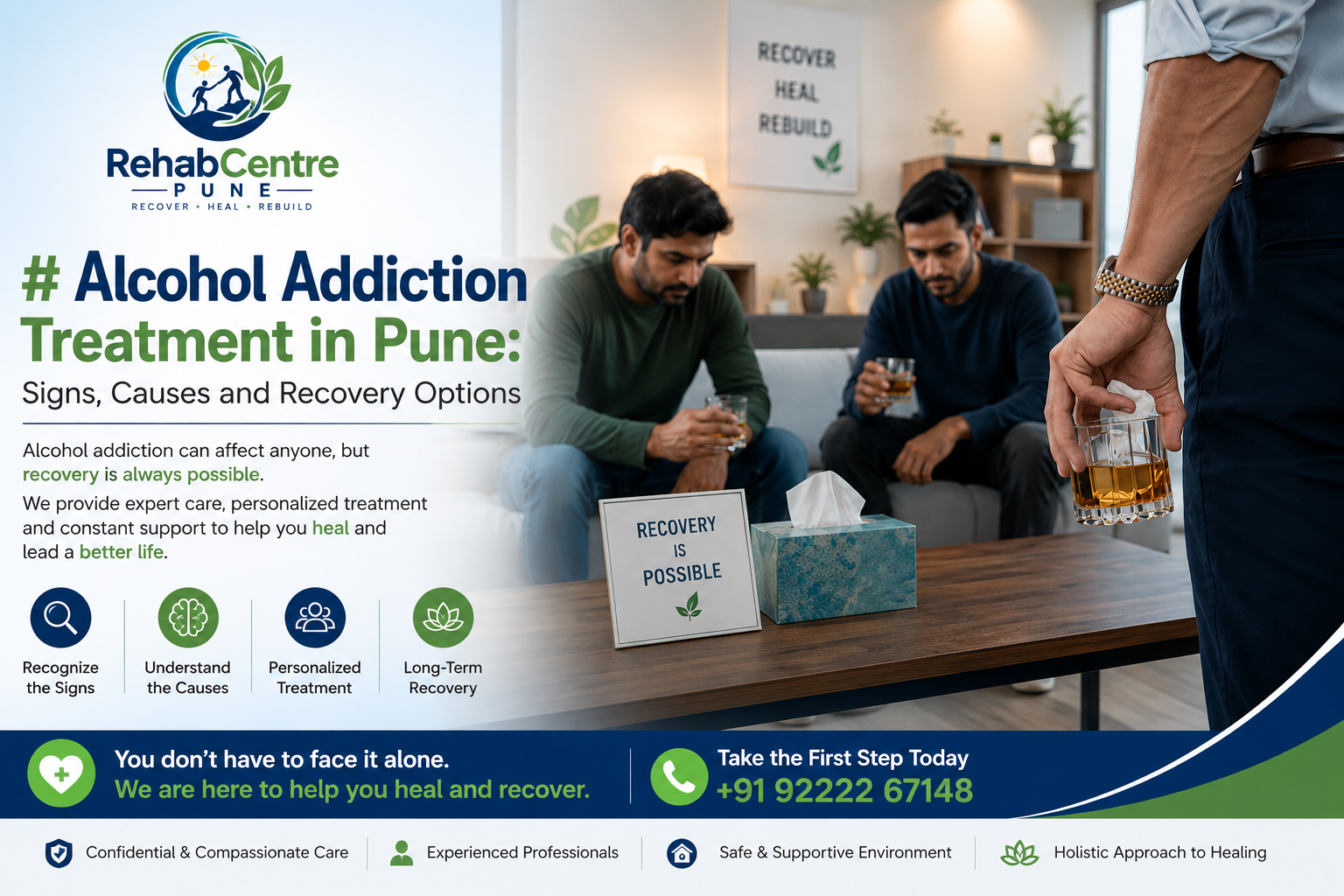
Alcohol addiction can affect a person’s physical health, emotional well-being, relationships, work, and everyday life. What may begin as occasional or social drinking can gradually become difficult to control. When someone continues drinking despite experiencing negative consequences, professional support may be necessary.
Finding the right alcohol addiction treatment in Pune can help individuals understand their drinking patterns, identify triggers, develop healthier coping strategies, and work toward long-term recovery.
If you or someone you care about is struggling with alcohol dependence, understanding the signs, causes, treatment options, and recovery process can help you take the right first step.
Need Help With Alcohol Addiction Treatment in Pune?
Confidential support is available. Take the first step toward recovery today.
Call NowWhat Is Alcohol Addiction?
Alcohol addiction, commonly referred to as alcohol use disorder, is a condition in which a person has difficulty controlling their alcohol consumption despite experiencing problems related to drinking.
A person with alcohol addiction may continue drinking even when it affects their health, family relationships, work, finances, or emotional well-being.
Alcohol addiction is not simply a lack of willpower. It can involve biological, psychological, behavioral, and social factors. Professional treatment can provide structured support to help individuals understand these factors and develop healthier ways of living.
Common Signs of Alcohol Addiction
Recognizing the warning signs of alcohol addiction can help individuals and families seek support earlier.
Some common signs include:
- Drinking more alcohol or for longer than originally intended
- Repeatedly trying to reduce or stop drinking without success
- Experiencing strong cravings for alcohol
- Spending significant time drinking or recovering from its effects
- Continuing to drink despite problems at home or work
- Neglecting responsibilities because of alcohol use
- Losing interest in hobbies or activities
- Needing more alcohol to experience the same effects
- Experiencing withdrawal symptoms after reducing or stopping alcohol
- Using alcohol to deal with stress or difficult emotions
- Continuing to drink despite physical or psychological problems
Not everyone experiences the same symptoms. If drinking is becoming difficult to control or is causing problems in daily life, professional assessment can help determine whether treatment may be appropriate.
What Causes Alcohol Addiction?
There is no single cause of alcohol addiction. Several factors can contribute to the development of problematic drinking.
Genetics and Family History
A family history of alcohol-related problems may increase a person’s vulnerability to developing alcohol addiction. Genetic factors can influence how an individual responds to alcohol and their risk of developing dependence.
Stress and Emotional Difficulties
Some people begin using alcohol as a way to cope with stress, anxiety, sadness, loneliness, or other difficult emotions. While alcohol may provide temporary relief, relying on it as a coping mechanism can gradually increase the risk of problematic drinking.
Social Environment
Friends, family, workplace culture, and social surroundings can influence drinking behavior. Regular exposure to heavy drinking may make excessive alcohol consumption seem normal.
Mental Health and Behavioral Factors
Psychological difficulties can sometimes occur alongside alcohol addiction. Addressing emotional and behavioral concerns as part of treatment can be important for long-term recovery.
When Should You Consider Alcohol De-Addiction Treatment?
Many people are unsure whether their drinking has reached a point where professional treatment is necessary.
You may want to consider alcohol de addiction support if:
- You cannot control how much you drink
- You frequently drink more than you intended
- You have tried to stop drinking several times
- Alcohol is affecting your family or relationships
- Your work or daily responsibilities are being affected
- You experience strong alcohol cravings
- You experience withdrawal symptoms when you do not drink
- You need alcohol to feel normal or function
- You continue drinking despite health or personal problems
You do not necessarily need to wait until the problem becomes severe before seeking help. Early professional assessment can help identify appropriate treatment and recovery options.
What Is Alcohol De-Addiction Treatment?
Alcohol de addiction refers to structured treatment and support designed to help people address problematic alcohol use and work toward recovery.
Depending on the person’s needs, treatment may involve assessment, withdrawal management, counseling, behavioral therapy, family support, relapse prevention, and aftercare.
If you are researching a Nasha Mukti Kendra in Pune for alcohol-related concerns, look beyond the name of the facility and understand what type of professional treatment and recovery support it provides.
Steps Involved in Alcohol Addiction Treatment
1. Initial Assessment
Treatment generally begins with an assessment of the individual’s alcohol use and overall health.
Professionals may consider:
- Drinking frequency and quantity
- Duration of alcohol use
- Previous attempts to stop
- Previous withdrawal experiences
- Physical health
- Psychological well-being
- Family and social circumstances
- Other substances or medications being used
This information helps professionals understand the person’s needs and develop an appropriate treatment plan.
2. Withdrawal Management
Some people with significant alcohol dependence can experience withdrawal symptoms when they suddenly reduce or stop drinking.
Withdrawal can range from mild symptoms to serious complications. For some individuals, medical monitoring may be necessary.
Because of this, people with significant alcohol dependence should not assume that suddenly stopping alcohol without professional guidance is always safe.
A qualified healthcare professional can assess the situation and determine the appropriate level of support.
3. Counseling and Therapy
Counseling is an important part of many alcohol recovery programs.
Therapy can help individuals understand:
- Why they drink
- What situations trigger drinking
- How they respond to stress
- How cravings affect their behavior
- Which thoughts and behaviors contribute to alcohol use
- How to develop healthier coping mechanisms
Depending on the treatment plan, support may include individual counseling, group therapy, behavioral approaches, or family counseling.
4. Relapse Prevention
Recovery is not only about stopping alcohol use. It is also about developing skills that can help maintain progress over time.
Relapse-prevention strategies may include:
- Identifying personal triggers
- Managing cravings
- Developing healthy daily routines
- Avoiding high-risk situations
- Learning stress-management techniques
- Building a strong support system
- Recognizing early warning signs
- Seeking help when difficulties arise
Why Professional Alcohol Addiction Treatment Can Help
Trying to overcome alcohol addiction without support can be challenging, particularly when dependence has developed.
Professional alcohol addiction treatment in Pune can provide a structured environment where individuals can receive appropriate assessment, counseling, recovery education, and ongoing support.
Professional treatment can also help address factors that contribute to problematic drinking rather than focusing only on stopping alcohol use.
A personalized treatment approach is important because each person’s history, health, environment, and recovery needs are different.
How Family Support Can Help Recovery
Alcohol addiction often affects more than the individual. Family members may experience worry, stress, financial difficulties, communication problems, and emotional exhaustion.
Families can support recovery by:
- Encouraging professional help
- Learning about alcohol addiction
- Avoiding blame and unnecessary judgment
- Supporting healthy routines
- Participating in family counseling when appropriate
- Understanding potential relapse warning signs
- Encouraging continued treatment and aftercare
Family members should also maintain healthy boundaries and seek professional guidance when needed.
How to Choose Alcohol Addiction Treatment in Pune
Choosing a suitable treatment provider is an important decision. Before selecting a facility, consider the following factors.
Qualified Professionals
Ask who provides treatment and counseling and what professional support is available.
Individualized Treatment
A good treatment plan should consider the person’s drinking history, physical health, psychological needs, family circumstances, and recovery goals.
Counseling and Therapy
Find out what types of counseling or behavioral support are included in the program.
Withdrawal Management
If someone has significant alcohol dependence, ask how the facility assesses and manages withdrawal-related concerns.
Family Involvement
Family education and counseling can be useful parts of recovery for some individuals.
Aftercare Support
Recovery continues after the initial treatment period. Ask whether the centre provides follow-up support and relapse-prevention guidance.
How Long Does Alcohol Addiction Treatment Take?
There is no fixed treatment duration that is appropriate for everyone.
The length and type of treatment can depend on:
- Severity of alcohol use
- Physical health
- Psychological needs
- Withdrawal concerns
- Previous treatment history
- Progress during treatment
- Support available after treatment
Some individuals may benefit from a structured residential program, while others may require different levels of ongoing support.
A qualified professional can assess the situation and recommend an appropriate treatment pathway.
What Happens After Alcohol Treatment?
Completing a treatment program is an important milestone, but recovery does not necessarily end when the program finishes.
Returning to everyday life can introduce situations, emotions, or social environments that may trigger cravings or old drinking patterns.
Aftercare can help individuals continue applying the skills learned during treatment.
Depending on the person’s needs, aftercare may include:
- Follow-up counseling
- Recovery support groups
- Relapse-prevention planning
- Family support
- Healthy lifestyle changes
- Ongoing professional care
Having a clear recovery plan can make the transition back to daily life more manageable.
When Looking for a Rehab Centre Near Me, What Should I Consider?
People searching online for a rehab centre near me often focus first on distance and convenience. While location is important, it should not be the only factor.
Consider the centre’s:
- Treatment approach
- Professional support
- Counseling services
- Individualized care
- Withdrawal-management process
- Family involvement
- Relapse-prevention support
- Aftercare services
A nearby centre may be convenient, but the quality and suitability of treatment should remain a priority.
Take the First Step Toward Recovery
Alcohol addiction can affect almost every part of a person’s life, but professional treatment can provide structured support for recovery.
If you or someone you care about is struggling with alcohol use, seeking professional assessment can help you understand the available options. Alcohol addiction treatment in Pune may include assessment, withdrawal management when clinically required, counseling, behavioral support, relapse prevention, and aftercare.
Recovery is different for every person. The most appropriate treatment approach depends on individual needs, health, alcohol use patterns, and circumstances.
Taking the first step and asking for professional guidance can help you understand what support may be appropriate.
Final Thoughts
Recognizing an alcohol problem is an important first step toward recovery. Whether someone is experiencing difficulty controlling their drinking or has developed alcohol dependence, professional assessment can help identify appropriate treatment options.
When choosing alcohol addiction treatment in Pune, focus on the quality of care, professional support, individualized treatment, counseling, relapse prevention, and aftercare rather than choosing a facility based only on location.
If you or a loved one is struggling with alcohol addiction, consider reaching out to a qualified treatment professional to discuss the situation and understand the next steps toward recovery.
Frequently Asked Questions
What are the common signs of alcohol addiction?
Common signs include difficulty controlling drinking, repeated attempts to stop, strong cravings, increased tolerance, withdrawal symptoms, and continuing to drink despite problems caused by alcohol.
What is alcohol de-addiction treatment?
Alcohol de-addiction treatment is a structured approach to addressing problematic alcohol use. Depending on individual needs, it may include assessment, withdrawal management, counseling, behavioral support, relapse prevention, and aftercare.
Is it safe to suddenly stop drinking alcohol?
For people with significant alcohol dependence, suddenly stopping can cause withdrawal symptoms that may sometimes become serious. Anyone concerned about alcohol dependence should seek professional medical guidance before making major changes to their alcohol use.
Can alcohol addiction be treated?
Yes. Alcohol addiction is treatable. Many people work toward recovery with appropriate professional support, counseling, behavioral strategies, and ongoing recovery planning.
How long does alcohol de-addiction treatment take?
Treatment duration varies depending on factors such as the severity of alcohol use, withdrawal concerns, physical and psychological health, previous treatment, and individual progress.
Can family members participate in alcohol addiction treatment?
Yes, family involvement may be included through education, counseling, communication support, and recovery planning. The appropriate level of involvement depends on the individual’s treatment plan.
How can I choose alcohol addiction treatment in Pune?
Look for a treatment provider that offers appropriate professional support, individualized treatment, counseling, withdrawal assessment, family support, relapse-prevention planning, and aftercare.