Alcohol is often associated with social gatherings, celebrations, and relaxation. However, regular or excessive drinking can gradually become difficult to control. What may begin as occasional drinking can develop into dependence and start affecting a person’s physical health, emotional well-being, relationships, work, and everyday life.
Recognising the signs of alcohol addiction early can help individuals and families seek appropriate support before the problem becomes more severe. Alcohol addiction is a treatable condition, and professional guidance can make the recovery process safer and more structured.
In this article, we discuss 10 warning signs of alcohol addiction, when drinking may indicate a serious problem, and when professional alcohol addiction treatment may be appropriate.
What Is Alcohol Addiction?
Alcohol addiction, also referred to as alcohol dependence or alcohol use disorder, is a condition in which a person has difficulty controlling their alcohol consumption despite experiencing negative consequences.
It is important to understand that alcohol addiction is not determined only by the amount a person drinks. The pattern of drinking, loss of control, cravings, tolerance, withdrawal symptoms, and the impact of alcohol on everyday life can all provide important clues.
Some people may recognise that their drinking has become problematic, while others may believe they can stop whenever they want. This is why understanding common alcohol addiction symptoms can help families recognise when professional support may be necessary.
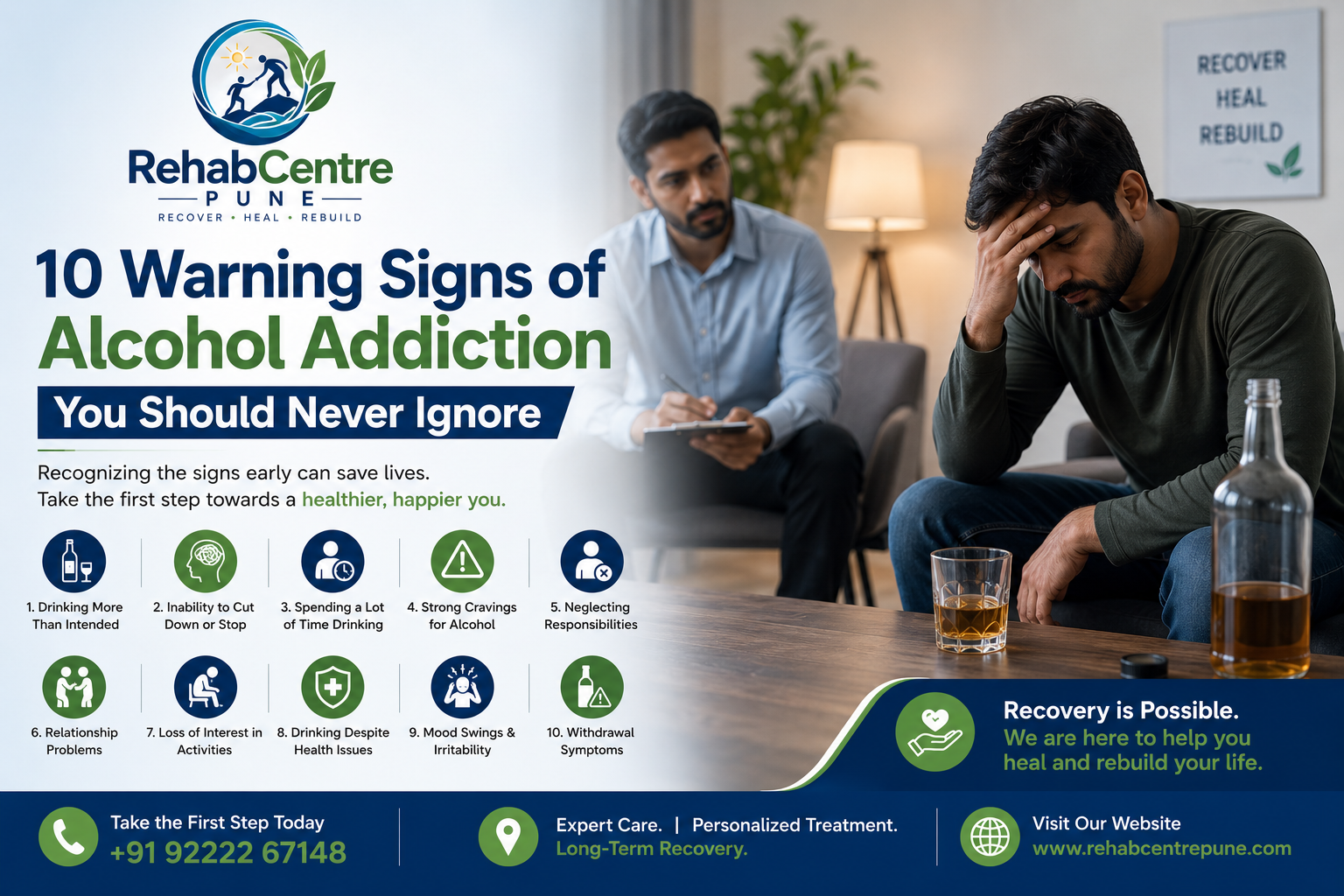
10 Warning Signs of Alcohol Addiction
1. Drinking More Than You Intended
One of the common warning signs of alcohol addiction is regularly drinking more than you originally planned.
For example, someone may decide to have one or two drinks but continue drinking for much longer. They may also set limits for themselves but repeatedly find it difficult to follow them.
Occasionally drinking more than planned does not necessarily mean someone has an addiction. However, if losing control over the amount or duration of drinking happens repeatedly, it should not be ignored.
2. Experiencing Strong Cravings for Alcohol
Strong or frequent cravings can be another important indicator.
A person may find themselves thinking about alcohol throughout the day or feeling a strong urge to drink after stressful situations. They may begin relying on alcohol to relax, sleep, socialise, cope with difficult emotions, or feel comfortable.
When drinking becomes something a person feels they need rather than simply want, it can indicate that alcohol is beginning to take greater control over their behaviour.
3. Needing More Alcohol to Feel the Same Effects
Developing a higher tolerance is another potential sign of alcohol dependence.
A person may gradually need to consume more alcohol to experience the same effects they previously experienced with a smaller amount. What once felt like several drinks may eventually require significantly more.
Increasing tolerance can encourage heavier drinking and increase the risk of alcohol-related health problems. It is therefore important not to dismiss a noticeable increase in alcohol consumption as simply “building tolerance.”
4. Repeatedly Trying but Failing to Cut Down
A person struggling with alcohol addiction may genuinely want to reduce or stop drinking but repeatedly find themselves returning to old drinking patterns.
They may make promises such as:
- “I will stop drinking from tomorrow.”
- “I will only drink on weekends.”
- “I can control how much I drink.”
- “This is the last time.”
If these attempts repeatedly fail, it may be one of the significant signs of alcoholism or alcohol dependence.
Rather than viewing this as a lack of willpower, it can be helpful to understand that addiction may require professional assessment and structured treatment.
5. Drinking Alone or Hiding Alcohol Use
Changes in how someone drinks can also provide valuable clues.
A person may begin drinking alone, hiding bottles, lying about how much they consume, or avoiding conversations about their drinking.
They may also create explanations to hide alcohol use from family members, friends, or colleagues.
Drinking alone does not automatically mean someone has an alcohol addiction. However, secrecy combined with other behavioural or physical changes can be an important warning sign.
6. Neglecting Work, Family or Daily Responsibilities
Alcohol can gradually become a priority over important responsibilities.
Someone experiencing problematic drinking may begin:
- Missing work or appointments
- Arriving late regularly
- Neglecting household responsibilities
- Struggling with professional commitments
- Losing interest in family activities
- Having difficulty maintaining normal routines
These changes can affect relationships, financial stability, education, and career development.
When alcohol begins interfering with responsibilities that were previously manageable, it may be time to consider professional support.
7. Continuing to Drink Despite Negative Consequences
One of the more concerning alcohol addiction symptoms is continuing to drink even when alcohol is clearly contributing to problems.
These problems can include:
- Frequent family arguments
- Relationship difficulties
- Financial stress
- Poor work performance
- Health concerns
- Emotional distress
- Social problems
A person may recognise that alcohol is contributing to these difficulties but still feel unable to stop drinking.
This cycle can become increasingly difficult to break without appropriate support.
8. Experiencing Alcohol Withdrawal Symptoms
Withdrawal symptoms can occur when someone who has developed physical dependence on alcohol significantly reduces or stops drinking.
Possible alcohol withdrawal symptoms include:
- Shaking or tremors
- Sweating
- Anxiety
- Irritability
- Nausea
- Restlessness
- Difficulty sleeping
- Increased heart rate
- Strong cravings
In some cases, alcohol withdrawal can become severe and potentially life-threatening. Symptoms such as seizures, hallucinations, severe confusion, or extreme agitation require urgent medical attention.
People who drink heavily or have been drinking regularly for a long time should speak with a healthcare professional before attempting to stop suddenly. Medical assessment can help determine the safest approach to withdrawal management.
9. Losing Interest in Hobbies and Normal Activities
Another warning sign is gradually losing interest in activities that were once enjoyable.
A person may stop exercising, meeting friends, participating in hobbies, or spending time with family because drinking has become more important.
They may spend increasing amounts of time obtaining alcohol, drinking, or recovering from its effects.
Over time, this can contribute to isolation and negatively affect emotional well-being.
10. Repeated Relapse or Returning to Alcohol After Trying to Quit
Repeatedly returning to alcohol after attempting to quit can also indicate that additional support is needed.
A person may stop drinking for a period but begin again after experiencing stress, emotional difficulties, social pressure, or other triggers.
Relapse does not mean that recovery is impossible. Addiction recovery is a process, and a return to drinking can indicate that the person’s recovery plan needs to be reassessed or strengthened.
Professional counselling, family support, behavioural strategies, and relapse-prevention planning can help individuals develop healthier ways of managing triggers.
How Alcohol Addiction Can Affect Daily Life
Alcohol addiction can affect almost every area of a person’s life. The consequences may extend beyond physical health and include emotional, social, professional, and financial difficulties.
Long-term problematic alcohol use can contribute to health complications and may worsen existing mental health concerns. It can also create conflict between family members, affect trust in relationships, and interfere with work or education.
For families, recognising these changes can be difficult. Some people may try to hide the problem because of shame, fear, or concerns about how others will react.
Approaching the situation with understanding rather than judgment can make it easier for someone to consider getting help.
When Should You Seek Professional Help?
You do not need to wait until alcohol addiction has caused a major crisis before seeking professional assistance.
Consider speaking with a qualified healthcare or addiction professional if someone:
- Cannot control their drinking
- Experiences frequent alcohol cravings
- Has repeatedly tried to stop without success
- Experiences withdrawal symptoms
- Has alcohol-related family or work problems
- Continues drinking despite negative consequences
- Has experienced repeated relapse
- Wants to stop drinking but cannot do so independently
An assessment can help determine the severity
of the problem and identify an appropriate treatment approach.
How Alcohol Addiction Treatment Can Help
Professional alcohol addiction treatment can provide structured support for individuals who are finding it difficult to overcome alcohol dependence.
Depending on the person’s needs, treatment may include:
- Initial assessment and treatment planning
- Medical supervision when withdrawal management is required
- Individual counselling
- Behavioural therapies
- Group therapy
- Family counselling
- Healthy lifestyle and wellness support
- Relapse-prevention strategies
- Ongoing aftercare
Treatment should be personalised because every individual’s drinking pattern, physical health, emotional needs, family situation, and recovery goals can be different.
A structured Vyasan Mukti Kendra or rehabilitation programme can provide an environment where individuals can focus on recovery while receiving appropriate professional guidance.
How Can Family Members Help?
Family members often play an important role in recognising problematic drinking and encouraging treatment.
Instead of blaming or shaming the person, families can:
- Choose a calm time to discuss their concerns
- Explain specific changes they have noticed
- Listen without immediately judging
- Encourage professional assessment
- Learn about addiction and recovery
- Support healthy routines
- Avoid enabling harmful drinking-related behaviour
Family counselling can also help relatives understand addiction and learn healthier ways to communicate and provide support.
Alcohol Addiction Recovery Is Possible
Recognising the warning signs is an important first step toward recovery. Alcohol addiction is a serious condition, but seeking help does not mean a person has failed. With appropriate treatment and ongoing support, many people are able to make meaningful changes and build healthier lives.
Depending on the individual’s needs, support may be available through an Nasha Mukti Kendra, rehabilitation programme, counselling service, or specialised addiction treatment centre.
The most appropriate option depends on the person’s physical and psychological needs, severity of alcohol dependence, and professional assessment.
Conclusion
The warning signs of alcohol addiction can sometimes develop gradually and may initially be overlooked. Drinking more than intended, strong cravings, increased tolerance, difficulty stopping, secrecy, neglected responsibilities, withdrawal symptoms, and continued drinking despite negative consequences can all indicate that alcohol use has become a serious concern.
If you recognise several of these signs of alcohol addiction in yourself or someone you care about, consider speaking with a qualified professional. Early support can help identify the underlying issues and provide a safer, more structured path toward recovery.
For individuals dealing with alcohol or other substance dependence, a drug de-addiction centre in Pune may provide professional guidance, counselling, and structured recovery support based on individual needs.
Recognising the problem is an important first step. Seeking the right support can be the next one.