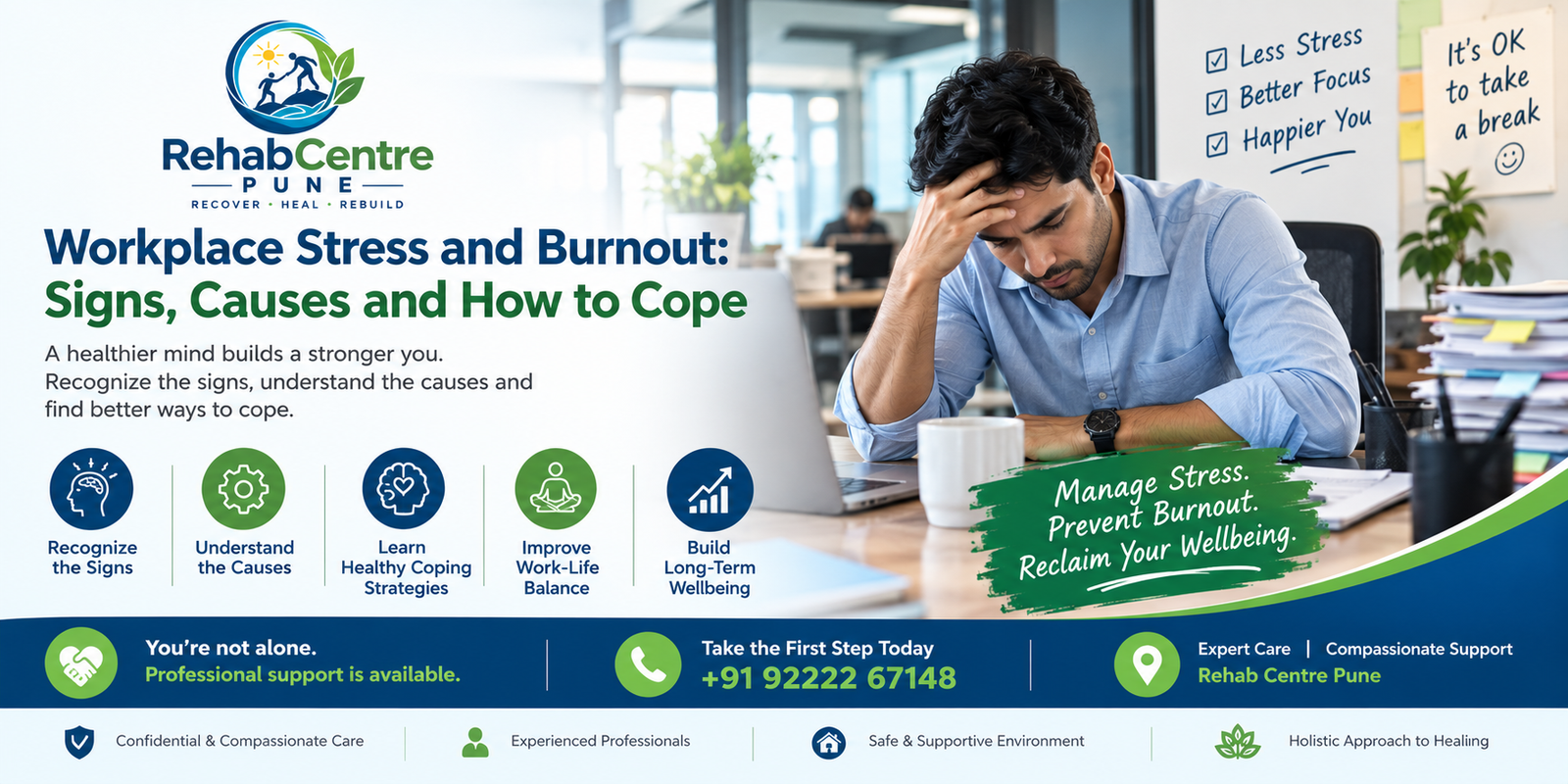
Workplace stress is the strain you feel when job demands become greater than your ability to cope with them. Long hours, tight deadlines and constant pressure are common for working professionals in Pune, and when stress continues for months, it can turn into burnout. If stress leads to unhealthy coping habits, seeking professional support from a Nasha Mukti Kendra in Pune may also be helpful. This guide explains the signs of workplace stress, its causes, practical ways to cope, and when to get professional support.
What Is Workplace Stress?
Workplace stress is a physical and emotional reaction to job pressure that feels bigger than your resources to handle it. Short bursts of work stress are normal, such as before a big presentation. It becomes a problem when it is constant and starts affecting your health, mood or relationships.
Work stress, job stress and work related stress all describe the same thing. Burnout is what can follow when that stress is not addressed. The World Health Organization describes burnout as an occupational phenomenon linked to chronic workplace stress that has not been successfully managed.
What Are the Signs of Burnout at Work?
The main signs of burnout at work are constant exhaustion, growing negativity about your job, and feeling less effective than before. These burnout symptoms build up gradually, so many people overlook them at first.
Emotional signs
- Feeling drained even after rest or a weekend off
- Dreading work or feeling detached from it
- Irritability, low mood or feeling numb
- Self-doubt and a sense that nothing you do is enough
Physical signs
- Frequent headaches, body aches or muscle tension
- Trouble falling asleep or staying asleep
- Changes in appetite
- Getting ill more often
Behavioural signs
- Procrastinating or struggling to concentrate
- Withdrawing from colleagues, friends or family
- Missing deadlines or making more mistakes
- Relying on alcohol, sleeping pills or other substances to unwind
What Causes Workplace Stress?
The main causes of workplace stress are excessive workload, poor control over your work, unclear expectations and weak support from managers or colleagues. Different jobs have different pressures, but several causes appear again and again.
- Heavy workload and long hours: Too much work with too little time, and no clear end to the working day.
- Unrealistic deadlines: Constant urgency and little room to recover between tasks.
- Lack of control: Having little say in how or when you work.
- Role confusion: Unclear responsibilities or conflicting instructions.
- Job insecurity: Worry about layoffs, targets or performance reviews.
- Poor work culture: Conflict, lack of recognition or an unsupportive manager.
- Blurred boundaries: Answering messages late at night, especially with remote or hybrid work.
How Can You Cope with Work Stress?
You can cope with work stress by setting boundaries, taking regular breaks, looking after your sleep and body, and talking to someone you trust. Small, consistent changes work better than one big effort.
- Set clear work hours. Switch off notifications after work and protect your evenings.
- Take real breaks. Step away from your desk during the day, even for ten minutes.
- Prioritise your tasks. Do the most important work first and speak up early if the workload is unrealistic.
- Move your body. A walk, yoga or any regular exercise helps lower tension.
- Protect your sleep. Keep a regular bedtime and avoid screens late at night.
- Practise calming techniques. Slow breathing, mindfulness or journaling can settle a racing mind.
- Talk about it. Share what you are going through with a friend, family member or your manager.
When Does Stress Turn into Unhealthy Coping?
Stress becomes risky when you start depending on alcohol, sleeping pills or other substances to get through the day or switch off at night. This pattern often begins as an occasional drink to relax, but it can build into dependence without being noticed.
Watch for needing a drink to unwind after work, drinking more than you planned, or feeling unable to relax without it. If this sounds familiar, support is available through our Alcohol Addiction Treatment programme.
Families sometimes look for a nasha mukti kendra when they see a loved one struggling in this way. Seeking help early makes recovery easier, and there is no need to wait for things to get worse.
When Should You Seek Professional Help?
Seek professional help when workplace stress affects your sleep, mood, health or relationships for more than a few weeks, or when self-care is no longer enough. You do not need to wait until you reach a breaking point.
Consider reaching out if you notice:
- Constant anxiety, panic or a sense of dread about work.
- Persistent low mood or loss of interest in things you enjoyed.
- Difficulty functioning at work or at home.
- Using alcohol or other substances to cope.
Our Anxiety Disorders & Stress Clinic offers support for stress, anxiety and related concerns, with a personalised approach for each person.
If workplace stress is affecting your mood, sleep or daily routine, anxiety counselling and emotional stress support can help you understand your triggers and develop healthier coping strategies. If you ever have thoughts of harming yourself, please contact a trusted person or a helpline straight away. In India, you can call Tele-MANAS at 14416 for mental health support.
Take the First Step Towards Feeling Better
You do not have to manage workplace stress alone. If you or someone close to you needs support and is searching for a rehab centre near me, our team is here to talk, with no judgement and no pressure.
To learn how we work with individuals and families, explore our Vyasan Mukti Kendra services in Pune.
Frequently Asked Questions
How do I know if I am burned out?
If you feel constantly exhausted, detached from work and less effective than before, you may be experiencing burnout symptoms. A mental health professional can assess this properly.
Can work stress cause anxiety?
Yes. Long-term workplace stress can contribute to anxiety, sleep problems and low mood in some people.
How long does it take to recover from burnout?
It varies from person to person. Recovery usually needs rest, changes at work and sometimes professional support.
Is workplace stress the same as burnout?
No. Stress is a reaction to pressure, while burnout is associated with chronic workplace stress that has not been successfully managed.
When should I see a doctor for work stress?
See a doctor or counsellor if work stress has lasted for several weeks and affects your sleep, health or daily life.