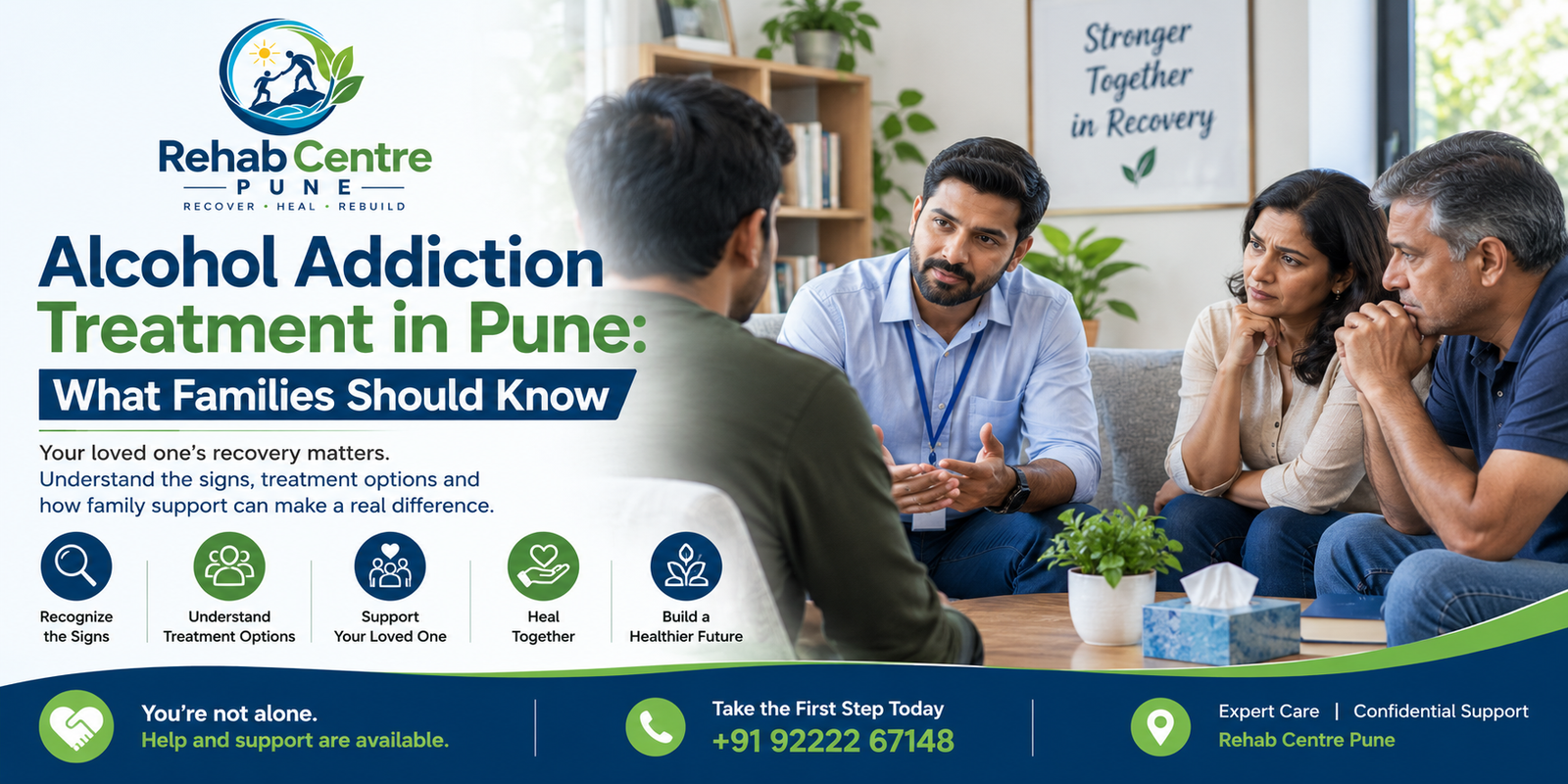
Finding the right alcohol addiction treatment in Pune can be a difficult decision for families. In many cases, the search for professional help begins after months or years of concern—changes in behaviour, strained relationships, missed responsibilities, health problems, or repeated attempts to stop drinking.
If your family is considering treatment, understanding what the process involves can make the first step easier. An alcohol rehabilitation centre in Pune may provide structured support for the physical, psychological, emotional, and social aspects of alcohol addiction.
This guide explains what families should know about treatment, withdrawal, counselling, family involvement, recovery, and aftercare.
Need Help With Alcohol Addiction Treatment in Pune?
Confidential support is available for individuals and families looking for guidance on alcohol de-addiction, rehabilitation and recovery.
CALL NOW – 8506085075Why Families Search for Alcohol Addiction Treatment in Pune
It is rarely one incident that causes a family to search for treatment. More often, they notice a pattern developing over time.
Some common concerns include:
- Drinking becoming more frequent or difficult to control
- Strong cravings for alcohol
- Repeated attempts to stop drinking without success
- Problems at work or home
- Arguments or relationship difficulties
- Financial problems related to drinking
- Drinking despite physical or emotional consequences
- Changes in mood or behaviour
- Withdrawal symptoms when alcohol use is reduced
- Increasing dependence on alcohol to manage stress or difficult emotions
When these concerns continue, a professional assessment can help determine whether structured treatment may be appropriate.
Families searching for a nasha mukti kendra or alcohol de-addiction centre should focus on the type of care offered, the professionals involved, medical support, counselling services, and continuing recovery support.
Understanding Alcohol Addiction as a Treatable Condition
Alcohol use disorder is a health condition that can affect physical health, emotional wellbeing, relationships, and everyday functioning. It is more complicated than simply deciding to stop drinking.
This distinction is important for families because it can change the way they approach treatment. Instead of focusing only on willpower or blame, families can focus on professional assessment and appropriate support.
Depending on an individual’s needs, treatment may include:
- Medical assessment
- Withdrawal management
- Individual counselling
- Behavioural therapy
- Group support
- Family counselling
- Relapse-prevention planning
- Continuing care and aftercare
Every person’s recovery journey is different. A treatment plan should therefore consider factors such as drinking history, physical health, mental health, previous treatment, withdrawal risk, and the person’s recovery goals.
What Can Alcohol Withdrawal Involve?
Alcohol withdrawal is an important consideration when someone who drinks heavily or regularly decides to stop.
Symptoms can range from mild to severe and may include:
- Anxiety or restlessness
- Shaking
- Sweating
- Nausea
- Headache
- Difficulty sleeping
- Irritability
- Increased heart rate
In some cases, serious complications such as seizures, severe confusion, or delirium can occur.
For this reason, people with significant alcohol dependence should not assume that suddenly stopping alcohol without medical guidance is safe. A healthcare professional can assess the person’s circumstances and determine whether supervised withdrawal management or another level of medical care is required.
If your family is considering alcohol de-addiction treatment in Pune, ask the centre about its assessment process, withdrawal support, medical supervision, and arrangements for emergencies.
What Does Alcohol De-Addiction Treatment in Pune Involve?
The exact programme differs between treatment facilities and depends on the person’s needs. However, structured alcohol treatment may involve several stages.
1. Initial Assessment
Treatment commonly begins with an assessment of the person’s alcohol use, physical health, psychological wellbeing, previous treatment, withdrawal history, and other relevant circumstances.
This helps professionals determine the appropriate level and type of care.
2. Detoxification and Withdrawal Management
When clinically appropriate, withdrawal management may be provided before or alongside ongoing treatment.
Detoxification addresses the immediate physical effects of stopping alcohol. However, detox alone does not address the underlying factors that contribute to continued drinking.
3. Individual Counselling
Individual counselling gives a person an opportunity to explore drinking patterns, emotional difficulties, triggers, relationships, and recovery goals.
Counselling approaches can vary depending on the person’s needs and the professionals providing treatment.
4. Behavioural and Psychological Support
Therapy can help individuals understand situations that contribute to drinking and develop healthier ways of managing cravings, stress, difficult emotions, and high-risk situations.
5. Group Support
Some rehabilitation programmes include group sessions. These may provide opportunities to discuss recovery challenges, develop coping strategies, and learn from people experiencing similar difficulties.
6. Family Counselling
Alcohol addiction can affect the entire household. Family counselling can help relatives understand addiction, communicate more effectively, establish healthy boundaries, and learn how to support recovery without unintentionally enabling harmful behaviour.
Families should ask an alcohol rehabilitation centre in Pune about its exact treatment structure, professional staff, medical facilities, family involvement, and aftercare services.
How Families Can Prepare for a Conversation About Treatment
Talking to someone about alcohol addiction is rarely easy. A family member may feel embarrassed, defensive, angry, or unwilling to accept that there is a problem.
There is no single conversation that works for everyone, but families can consider the following:
Choose an Appropriate Time
Avoid starting an important conversation when the person is intoxicated or when there is already an argument taking place.
Focus on Specific Concerns
Rather than making general accusations, explain specific situations that have caused concern.
For example, discuss missed responsibilities, health concerns, or changes in family relationships.
Avoid Blame
Statements that focus on shame or character can make communication more difficult. Try to communicate concern while maintaining reasonable boundaries.
Listen
Allow the person to express their concerns about treatment. They may have questions about what happens at a rehabilitation centre, how long treatment takes, or whether they will be able to continue working or managing family responsibilities.
Have Information Available
Before starting the conversation, families can research treatment options, counselling services, and a suitable rehab centre near me so they can answer basic questions and explain what the next step could look like.
What Role Do Families Play During Treatment?
Family support can remain important throughout recovery. A person may return to the same household, relationships, routines, and social environment after treatment.
Depending on the treatment programme, family involvement may include:
- Family counselling
- Education about alcohol addiction
- Scheduled communication with the treatment team
- Learning about triggers and warning signs
- Establishing healthy boundaries
- Supporting healthier routines
- Planning for the transition home
Supporting someone does not mean taking responsibility for their recovery. Families can support healthy choices while also maintaining boundaries around behaviour that is harmful to themselves or others.
Why Counselling Can Be Important in Alcohol Recovery
Stopping alcohol use addresses only one part of recovery. Some people also need support in understanding why drinking became difficult to control.
Addiction counselling may address areas such as:
- Emotional triggers
- Stress management
- Cravings
- Relationship difficulties
- Negative thought patterns
- Coping strategies
- Relapse prevention
- Healthy daily routines
Counselling may continue after residential or structured treatment, depending on the individual’s needs.
Life After Treatment: Why Aftercare Matters
Completing a treatment programme does not necessarily mean that recovery is finished.
Returning home can introduce familiar triggers, social situations, stress, and routines associated with previous drinking.
An alcohol recovery plan may therefore include:
- Follow-up counselling
- Individual therapy
- Family counselling
- Peer support
- Relapse-prevention planning
- Healthy lifestyle changes
- Ongoing medical or psychological support when required
Aftercare can help a person identify challenges early and seek support rather than waiting until a problem becomes more serious.
How Wellness Programs Can Support Recovery
Recovery involves more than avoiding alcohol. Developing healthier routines and finding constructive ways to manage stress can also be useful.
Depending on the programme, wellness programs may include activities focused on:
- Mindfulness
- Relaxation
- Physical activity
- Healthy nutrition
- Sleep routines
- Creative expression
- Emotional wellbeing
- Stress management
These activities should be viewed as supportive components of recovery rather than replacements for appropriate medical or psychological treatment.
How to Choose an Alcohol Rehabilitation Centre in Pune
Families may find several treatment options when searching for an alcohol rehabilitation centre in Pune. Comparing the actual services provided can be more useful than choosing based only on advertisements or promises.
Before making a decision, consider asking:
Does the centre provide an individual assessment?
The treatment plan should take the person’s specific circumstances into account.
What happens during alcohol withdrawal?
Ask whether medical assessment and monitoring are available and what happens if serious withdrawal complications occur.
Who provides treatment?
Ask about the qualifications and roles of doctors, psychiatrists, psychologists, counsellors, therapists, nurses, and other professionals involved in care.
Is family counselling available?
If family participation is important, ask how relatives can participate and how frequently family sessions are offered.
What happens after treatment?
Ask about follow-up counselling, relapse-prevention support, referrals, and other continuing-care options.
What happens during a medical emergency?
Families should understand how urgent medical or psychiatric situations are handled and whether hospital referral arrangements are available.
What does the programme actually include?
A nasha mukti kendra may provide different types of de-addiction services depending on the facility. Families should therefore verify the actual programme, professional support, medical facilities, counselling, accommodation, and aftercare rather than relying only on the name of the centre.
Common Concerns Families Have
Will alcohol addiction treatment work?
There is no responsible way to guarantee a specific recovery outcome. Treatment can provide structured support and professional interventions, but recovery varies between individuals.
Factors such as the person’s circumstances, engagement with treatment, support system, ongoing care, and recovery environment can all influence the process.
How should we talk to our loved one about treatment?
Choose a calm time, describe specific concerns, avoid blame, listen to their perspective, and have information about treatment options available.
If communication repeatedly becomes difficult, family counselling may provide additional support.
What if they refuse treatment?
A person may initially refuse help. Families can still seek professional guidance about communication, boundaries, and appropriate next steps.
If there is an immediate medical emergency or severe withdrawal symptoms, urgent medical assistance should be sought.
How long does alcohol addiction treatment take?
There is no universal treatment duration. The appropriate level and length of care depend on factors such as alcohol use, withdrawal risk, physical and psychological health, previous treatment, and individual recovery needs.
Families should be cautious about programmes that guarantee recovery within a fixed number of days without first assessing the individual.
Is an alcohol de-addiction centre the same as a nasha mukti kendra?
The terms can overlap in India, but services vary between facilities. Before choosing a centre, families should verify the treatment approach, professional qualifications, medical support, counselling services, family involvement, and aftercare.
Taking the First Step Toward Recovery
Searching for alcohol addiction treatment in Pune can feel overwhelming, particularly when the family is dealing with uncertainty or conflict at home.
You do not need to understand every aspect of addiction treatment before making the first enquiry. A professional assessment can help clarify the person’s needs and whether they may require withdrawal management, residential rehabilitation, counselling, outpatient care, or another form of support.
If you are looking for an alcohol de-addiction centre, a nasha mukti kendra, or a rehab centre near me, take time to understand the services available, the professionals involved, the approach to withdrawal, family participation, and continuing care.
The first conversation does not have to solve everything. It can simply help your family understand the available options and decide on an appropriate next step.
Frequently Asked Questions
Is alcohol addiction treatable?
Yes, alcohol use disorder is a recognised, treatable condition, though the process and duration vary from person to person.
Is alcohol detox always necessary?
Whether medical detox is required depends on the individual’s history of use and should be determined through professional assessment, not self-diagnosis.
Can family members be involved in alcohol addiction treatment?
Many treatment approaches include family counselling or updates, since the home environment plays a role in long-term recovery.
What happens after alcohol rehabilitation treatment ends?
Many programs include or recommend aftercare support such as follow-up counselling or support groups to help maintain recovery.
If your family is navigating a loved one’s drinking and considering alcohol addiction treatment in Pune, reaching out for an assessment or a confidential conversation is often a useful first step, even before you have decided on a program.