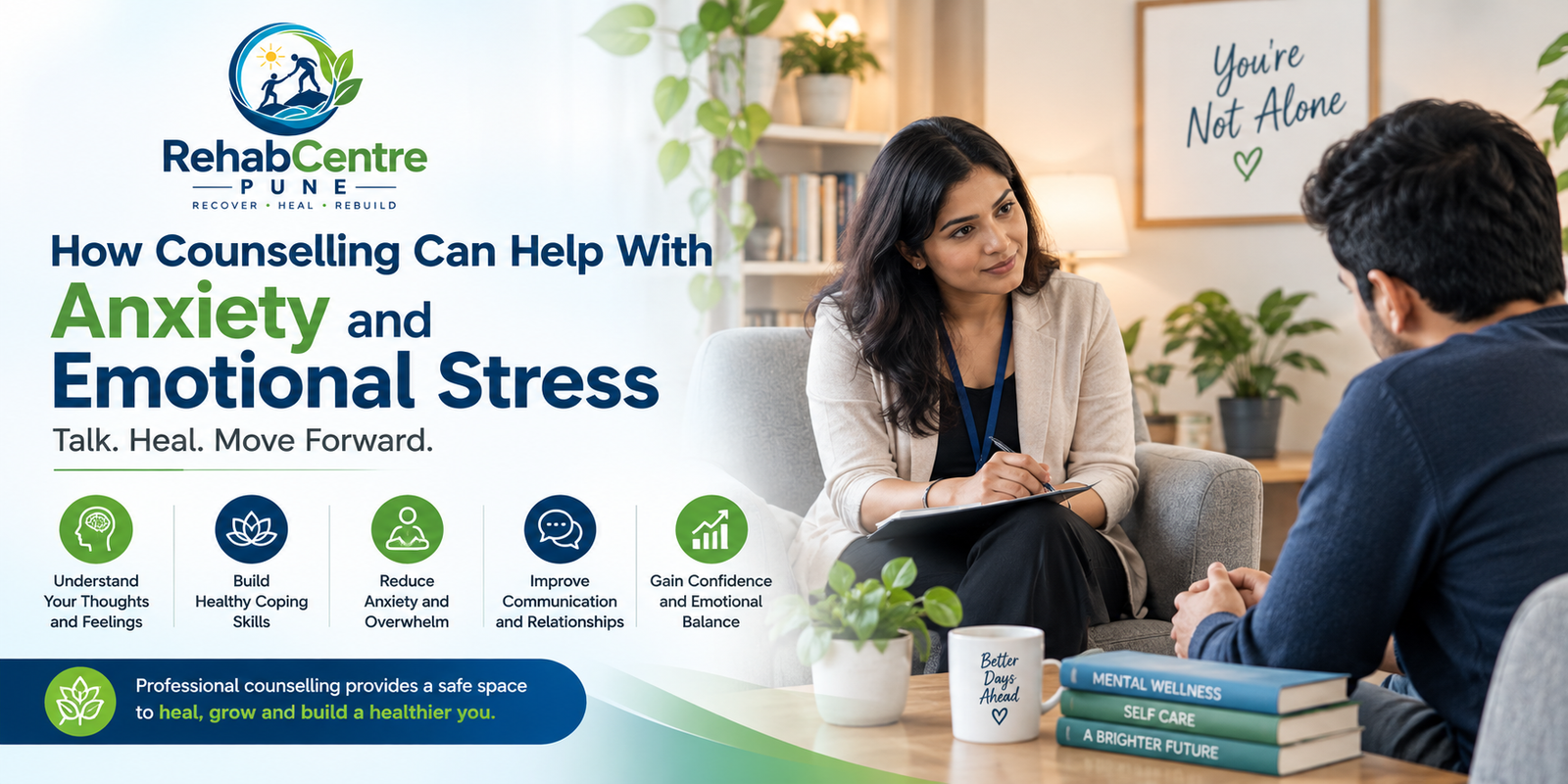
Anxiety and emotional stress can affect how a person thinks, feels, sleeps, works, and interacts with others. Occasional worry is a normal part of life, but persistent anxiety or prolonged stress can become difficult to manage when it begins interfering with everyday activities and overall well-being.
For people looking for anxiety counselling in Pune, professional counselling can provide a supportive environment to understand emotional concerns, identify possible triggers, and develop healthier coping strategies. Depending on an individual’s needs, counselling can be one part of broader Anxiety Disorder Treatments, alongside psychological therapies, stress-management techniques, wellness activities, and other professional support.
Looking for Anxiety Treatment in Pune? We’re Here to Help
Get professional guidance for anxiety, stress, and emotional well-being. Speak with our team to understand the available support options.
Call NowUnderstanding Anxiety and Emotional Stress
Anxiety is a natural response to situations perceived as uncertain, stressful, or threatening. It can help a person remain alert and prepared. However, anxiety can become a concern when feelings of fear, worry, or nervousness become persistent or disproportionate to the situation.
Emotional stress can develop when a person feels overwhelmed by ongoing responsibilities, relationship difficulties, work pressure, financial concerns, major life changes, or other challenging circumstances.
Anxiety and stress are different experiences, but they can occur together. Long-term stress may contribute to increased anxiety, while persistent anxiety can make ordinary situations feel more difficult to manage.
Understanding these experiences is often the first step towards identifying appropriate support.
Common Signs of Anxiety and Emotional Stress
Anxiety and stress can affect people differently. Some individuals mainly experience emotional symptoms, while others notice physical or behavioural changes.
Common signs may include:
- Persistent or excessive worrying
- Feeling nervous or constantly on edge
- Difficulty relaxing
- Irritability
- Trouble concentrating
- Avoiding certain situations
- Difficulty falling or staying asleep
- Fatigue
- Muscle tension
- Increased heart rate
- Sweating or trembling
- Feeling overwhelmed
- Changes in appetite
Experiencing one or more of these symptoms does not automatically mean that someone has an anxiety disorder. However, if symptoms continue or begin affecting daily life, professional assessment can help determine what type of support may be appropriate.
What Is Anxiety Counselling?
Anxiety counselling in Pune involves professional support designed to help individuals explore emotional concerns related to anxiety and stress.
A counselling session provides a structured and confidential environment where a person can discuss worries, fears, stressful experiences, emotional reactions, behavioural patterns, and challenges in everyday life.
Rather than simply trying to stop anxious thoughts, counselling may help individuals understand where those thoughts come from and how they respond to them.
The approach can vary depending on the individual’s circumstances, concerns, goals, and professional assessment.
How Counselling Can Help With Anxiety
Understanding Anxiety Triggers
One important part of counselling can be identifying situations, thoughts, or experiences that contribute to anxiety.
Triggers may include work pressure, relationship difficulties, financial concerns, social situations, major changes, academic pressure, or previous stressful experiences.
Recognising these patterns may help an individual become more aware of their emotional responses and work towards healthier ways of dealing with difficult situations.
Managing Excessive Worry
Persistent worrying can make it difficult to focus on the present. A person may repeatedly think about possible negative outcomes or feel unable to switch off their thoughts.
Counselling can provide an opportunity to explore these patterns and develop practical coping strategies. The goal is not necessarily to eliminate every worry but to develop healthier ways of responding to thoughts and uncertainty.
Identifying Unhelpful Thought Patterns
Anxiety may sometimes involve negative assumptions, fear of future events, or repeated thoughts about situations that have already happened.
Approaches such as cognitive behavioural therapy (CBT) focus on the relationship between thoughts, emotions, and behaviours. With guidance from a trained professional, individuals may learn to recognise unhelpful patterns and explore more balanced ways of responding.
Developing Coping Strategies
People respond to stress in different ways. Counselling for anxiety may help individuals identify coping methods that are practical and suitable for their circumstances.
Strategies may include:
- Breathing and relaxation exercises
- Mindfulness practices
- Emotional awareness
- Healthy daily routines
- Problem-solving techniques
- Improved communication
- Time-management strategies
- Healthy physical activity
- Relaxation and recreational activities
Anxiety Therapy in Pune: What Approaches May Be Used?
The type of anxiety therapy in Pune recommended can depend on the individual’s symptoms, circumstances, and assessment.
Some people may benefit from structured psychological therapies such as CBT. Others may require supportive counselling, stress-management techniques, or a combination of approaches.
Professional support may focus on:
- Managing anxious thoughts
- Understanding emotional triggers
- Improving emotional awareness
- Developing coping skills
- Reducing avoidance behaviours
- Managing everyday stress
- Improving communication
- Establishing healthier routines
There is no single approach that works in exactly the same way for everyone. An individualised assessment can help determine what type of support may be appropriate.
Counselling for Stress and Emotional Well-Being
Stress can come from many areas of life. Work responsibilities, family concerns, relationship difficulties, financial pressure, academic demands, and significant changes can all contribute to emotional stress.
Stress management therapy and counselling may help individuals understand how they respond to these pressures and explore healthier ways of managing them.
Sessions may focus on recognising early signs of stress, setting appropriate boundaries, improving communication, organising responsibilities, and developing relaxation techniques.
Emotional stress counselling can also provide a space for individuals to discuss concerns that may be difficult to address with family members, friends, or colleagues.
Anxiety and Stress Management Through Wellness Programs
Counselling can be complemented by wellness activities that support emotional and physical well-being.
Depending on the available program, activities may include:
- Mindfulness
- Diaphragmatic breathing
- Nature-based activities
- Guided relaxation
- Expressive art
- Music-based activities
- Therapeutic movement
- Sleep and relaxation practices
These activities can give individuals additional opportunities to practise stress-management skills.
For example, mindfulness can encourage awareness of the present moment, while breathing exercises can become part of a relaxation routine.
Wellness programs should generally be viewed as complementary support. They are not intended to replace professional assessment or treatment when an individual requires clinical care.
How Anxiety Disorder Treatments May Include Counselling
Anxiety Disorder Treatments can involve different forms of professional support depending on the individual’s symptoms and circumstances.
Counselling may be one component of a broader approach that could include psychological therapy, behavioural strategies, stress management, wellness activities, and other professional care.
For someone searching for anxiety treatment in Pune, understanding the available options can help them have a more informed discussion with a qualified professional.
Treatment plans may change over time depending on how an individual responds to support and whether additional concerns are identified.
Anxiety, Emotional Well-Being and Rehabilitation Support
Anxiety and emotional stress can sometimes occur alongside substance-related or behavioural concerns. In these situations, addressing emotional well-being may form part of a broader recovery plan.
A Nasha Mukti Kendra generally provides rehabilitation and recovery support for people dealing with substance-related concerns. Depending on the individual’s circumstances, counselling may also address emotional challenges, stress, relationships, coping mechanisms, and situations that may affect recovery.
Similarly, a Vyasan Mukti Kendra may incorporate counselling and supportive activities as part of a structured rehabilitation environment.
However, anxiety symptoms should be assessed individually. Not every experience of anxiety is related to substance use, and emotional concerns may require their own professional assessment and appropriate treatment.
When Should You Consider Professional Counselling?
Everyone experiences stress and worry from time to time. Professional support may be worth considering when anxiety or emotional stress becomes difficult to manage or begins affecting everyday life.
You may consider speaking with a professional if you experience:
- Persistent worry that is difficult to control
- Regular sleep difficulties related to worry
- Avoidance of everyday activities
- Difficulty concentrating at work or school
- Frequent feelings of being overwhelmed
- Ongoing irritability or emotional distress
- Anxiety affecting relationships
- Stress that continues despite lifestyle changes
- Difficulty managing normal responsibilities
A qualified professional can assess the concerns and discuss appropriate options.
What to Expect From Anxiety Counselling
An initial counselling session may involve discussing the individual’s concerns, experiences, symptoms, daily routine, and reasons for seeking support.
A professional may ask about situations that increase anxiety, current coping methods, sleep patterns, relationships, work or study pressures, and other relevant factors.
Future sessions may then focus on specific concerns and practical strategies based on the individual’s needs.
The counselling process varies from person to person. Some individuals may seek short-term support for a specific stressful situation, while others may benefit from ongoing counselling.
Choosing Anxiety Counselling in Pune
When searching for anxiety counselling in Pune, it can be helpful to understand what type of support a centre or professional provides.
You may want to ask about:
- Initial assessment procedures
- Types of counselling available
- Psychological therapy options
- Stress-management support
- Wellness programs
- Family counselling, where appropriate
- Follow-up and ongoing support
- How individual needs are considered
A supportive environment can make it easier for individuals to discuss personal concerns openly and understand their available options.
Conclusion
Anxiety and emotional stress can affect many aspects of everyday life, including sleep, relationships, work, concentration, and overall well-being. When these concerns become persistent or difficult to manage, professional support can help individuals better understand their experiences and explore appropriate coping strategies.
Anxiety counselling in Pune can provide a structured environment to discuss emotional concerns, identify triggers, understand thought patterns, and develop healthier approaches to managing stress.
Counselling may also complement broader Anxiety Disorder Treatments, stress-management strategies, and wellness programs. For individuals receiving rehabilitation support through a Nasha Mukti Kendra or Vyasan Mukti Kendra, addressing emotional well-being may also be relevant to a broader recovery plan when appropriate.
If anxiety or emotional stress is affecting everyday life, speaking with a qualified professional can help you understand the available support options and determine an approach suited to your individual needs.
Frequently Asked Questions
Can counselling help with anxiety?
Counselling can help individuals explore anxiety triggers, emotional responses, thought patterns, and coping strategies. The appropriate approach depends on the person’s individual circumstances.
What is the difference between anxiety counselling and anxiety therapy?
The terms can overlap. Counselling may involve supportive conversations around emotional concerns and coping, while therapy can include structured psychological approaches such as CBT. A qualified professional can recommend an appropriate approach based on an individual’s needs.
Can counselling help with stress?
Counselling can help individuals understand sources of emotional stress and develop strategies for coping with difficult situations, managing emotions, and improving everyday routines.
Are Anxiety Disorder Treatments different for every person?
They can be. The appropriate approach may depend on the type and severity of symptoms, personal circumstances, and professional assessment. Different people may require different forms or combinations of support.
Can wellness programs support anxiety management?
Activities such as mindfulness, breathing exercises, nature-based activities, music, expressive art, and relaxation practices may complement counselling and support overall well-being.
Can a Nasha Mukti Kendra provide counselling support?
A Nasha Mukti Kendra focuses primarily on rehabilitation and recovery from substance-related concerns. Counselling may form part of the support provided, depending on the centre and the individual’s needs. Anxiety or other mental health concerns may require additional professional assessment.