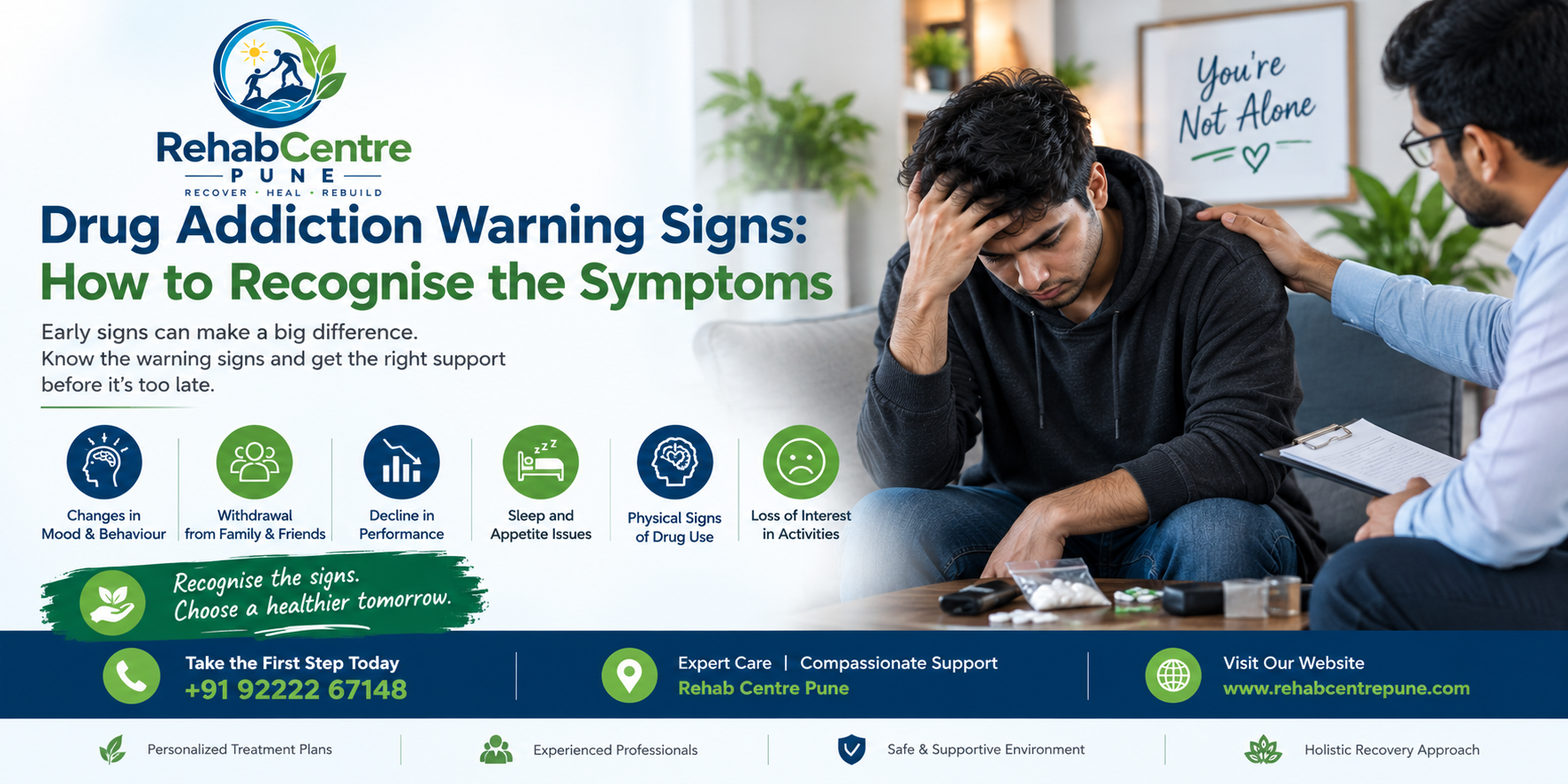
Drug addiction can affect a person’s physical health, emotional well-being, relationships, and everyday responsibilities. In many cases, the changes happen gradually, making it difficult for family members and friends to recognise that something is wrong. Understanding the drug addiction warning signs can help families identify concerning patterns and encourage their loved ones to seek appropriate professional support.
For families in Pune, recognising the early signs of drug addiction can be an important first step towards recovery. Changes in behaviour, unexplained financial difficulties, declining work or academic performance, and unusual physical symptoms may indicate a problem with substance use. However, no single sign confirms addiction, and these changes can also have other causes.
This guide explains the common symptoms of drug addiction, the physical and behavioural changes to watch for, and how families can support a loved one who may need help.
Concerned About Drug Addiction Warning Signs?
If you notice changes in a loved one’s behaviour, physical health, mood or daily activities, professional guidance can help you understand the possible signs of drug addiction and explore appropriate treatment and recovery support.
CALL NOW – 8506085075What Is Drug Addiction?
Drug addiction is commonly associated with a substance use disorder, a medical condition in which a person experiences difficulty controlling their drug use despite harmful consequences. A person may continue using a substance even when it affects their health, family relationships, employment, or personal responsibilities.
Drug-related problems can involve substances such as opioids, stimulants, cannabis, sedatives, and other drugs. The effects vary depending on the substance, the amount used, how frequently it is taken, and the individual’s health.
It is important to understand that addiction is not simply a lack of willpower. It can involve changes in brain function, emotional health, and behaviour. With appropriate treatment, support, and ongoing care, recovery is possible.
10 Drug Addiction Warning Signs Families Should Recognise
The signs of drug addiction may develop gradually or become noticeable after a significant change in a person’s circumstances. Families should pay attention to repeated patterns rather than judging someone based on one isolated incident.
1. Sudden Changes in Behaviour
One of the common drug addiction warning signs is a noticeable change in a person’s usual behaviour. Someone who was previously responsible and dependable may begin neglecting commitments, avoiding conversations, or acting unpredictably.
They may become unusually secretive about their activities, change their social circle, or react defensively when asked about their well-being.
Although behavioural changes can have several causes, persistent changes combined with other symptoms may indicate a need for further support.
2. Unexplained Mood Swings and Irritability
Substance use can affect mood, emotional regulation, and decision-making. A person may appear unusually excited or restless at one time and become irritable, anxious, or withdrawn later.
Some individuals may experience increased agitation or emotional distress when the effects of a substance wear off. Others may struggle with depression or anxiety alongside substance use.
These emotional changes are not proof of addiction, but they deserve attention when they repeatedly interfere with relationships or daily life.
3. Changes in Sleep Patterns
Sleep disturbances can be another indicator of problematic drug use. A person may stay awake for unusually long periods, sleep excessively, struggle to fall asleep, or follow an increasingly irregular sleep schedule.
Different substances affect sleep differently. Some may increase alertness, while others can cause drowsiness or sedation. Withdrawal may also disrupt normal sleeping patterns.
Families should look at sleep changes alongside other physical, emotional, and behavioural symptoms.
4. Declining Performance at Work or School
Difficulty concentrating, missed deadlines, frequent absences, and declining performance can be among the early signs of drug addiction.
A person may lose interest in studies, avoid professional responsibilities, or repeatedly fail to complete everyday tasks. They may also withdraw from hobbies and activities they previously enjoyed.
These changes can affect financial stability and future opportunities. If they occur alongside other concerning symptoms, a conversation about seeking professional help may be appropriate.
5. Physical Changes and Neglect of Personal Care
The physical signs of drug addiction depend on the substance involved and the person’s pattern of use. Possible changes include:
- Bloodshot eyes or unusually large or small pupils.
- Changes in appetite or unexplained weight fluctuations.
- Persistent fatigue, drowsiness, or unusual restlessness.
- Tremors, sweating, or impaired coordination.
- Deteriorating personal hygiene.
- Unexplained changes in general health.
Some substances can also affect the heart, lungs, liver, brain, and other organs. Not everyone experiences the same symptoms, and these signs may have unrelated medical explanations.
Sudden or severe physical symptoms should be assessed by a medical professional rather than automatically attributed to drug use.
6. Secretive Behaviour and Social Withdrawal
A person experiencing problems with drug use may begin avoiding family gatherings, withdrawing from close friends, or spending more time alone.
They may become defensive when asked about their activities or avoid discussing where they have been. In some cases, they may conceal their substance use because of fear, shame, or concern about how others will react.
Families should approach these situations calmly. Accusations and confrontations can make open communication more difficult, while a supportive conversation may help the person feel safer discussing their difficulties.
7. Financial Problems or Unexplained Spending
Repeated requests for money, unpaid bills, borrowing from friends, or unexplained financial difficulties can sometimes accompany problematic drug use.
A person may struggle to manage household expenses or become less transparent about spending. However, financial problems alone do not establish that someone is using drugs.
If financial difficulties occur alongside other concerning changes, family members can set reasonable boundaries while encouraging the person to seek an assessment.
8. Loss of Interest in Family, Friends, and Hobbies
When substance use becomes a priority, a person may gradually lose interest in relationships, recreational activities, and personal goals.
They may stop attending family events, neglect friendships, or spend less time on activities that once brought enjoyment. Responsibilities at home may also be ignored.
This withdrawal can place emotional strain on the entire family. Recognising the pattern early can help loved ones offer support before the situation becomes more disruptive.
9. Taking Risks or Making Unsafe Decisions
Drug use can affect judgement, coordination, attention, and impulse control. A person may engage in risky activities, drive while impaired, mix substances, or repeatedly make decisions that threaten their safety.
Some individuals may continue using drugs despite experiencing health problems, relationship conflicts, or difficulties at work.
These patterns can indicate that substance use is becoming difficult to control. Professional assessment can help determine the severity of the problem and identify appropriate treatment options.
10. Withdrawal Symptoms or Difficulty Stopping
One important sign of a possible substance use disorder is difficulty reducing or stopping drug use despite wanting to do so.
Depending on the substance, withdrawal may involve anxiety, sweating, nausea, tremors, sleep disturbances, agitation, or other symptoms. Some forms of withdrawal can be medically dangerous.
Not everyone who experiences withdrawal has an addiction, and not everyone with addiction experiences obvious withdrawal symptoms.
If someone has been using drugs regularly, they should seek medical advice before stopping abruptly. Withdrawal management and treatment should be tailored to the substance, the person’s health, and the level of risk.
Signs of Drug Abuse vs. Drug Addiction: What Is the Difference?
The terms drug abuse and drug addiction are often used interchangeably, but they do not mean exactly the same thing.
Signs of drug abuse may include using a substance in a dangerous way, taking drugs in circumstances that put others at risk, or continuing use despite negative consequences. The term drug abuse is widely used in everyday language, while healthcare professionals generally use terms such as substance misuse and substance use disorder.
Drug addiction generally refers to a pattern of compulsive substance use or difficulty controlling use despite harm. A healthcare professional can assess the person’s symptoms, history, and circumstances to determine whether a substance use disorder is present.
Families should avoid attempting to diagnose a loved one based on a checklist. Instead, they can focus on observable changes and encourage a professional assessment when concerns persist.
What Should You Do If You Notice Early Signs of Drug Addiction?
Recognising the problem is only the beginning. How family members respond can influence whether a loved one feels comfortable seeking help.
Consider these practical steps:
- Choose a calm moment: Talk privately when the person is not intoxicated or highly distressed.
- Describe specific concerns: Explain the changes you have noticed without making accusations or using insulting language.
- Listen without judgement: Give the person an opportunity to share what they are experiencing.
- Encourage professional assessment: A qualified doctor or addiction specialist can assess substance use, physical health, and emotional well-being.
- Set healthy boundaries: Avoid enabling unsafe behaviour, while continuing to offer reasonable emotional support.
- Protect your own well-being: Family members may also benefit from counselling or support while helping someone through recovery.
If a person is unconscious, having a seizure, experiencing severe breathing difficulties, or showing other signs of a medical emergency after taking a substance, seek emergency medical assistance immediately. Do not leave the person alone or assume they can sleep it off.
When Should Families Seek Drug Addiction Treatment in Pune?
Families should consider professional help when drug use repeatedly affects health, relationships, work, education, finances, or personal safety. It is not necessary to wait until the situation becomes severe before seeking advice.
People looking for drug addiction treatment in Pune can explore services that provide medical assessment, psychological support, structured treatment, and continuing recovery care.
Depending on individual needs, treatment may include:
- Medical assessment and supervised withdrawal management when indicated.
- Individual counselling and behavioural therapies.
- Assessment and treatment of co-occurring mental health concerns.
- Family counselling and education.
- Relapse-prevention planning and ongoing follow-up.
A Nasha Mukti Kendra in Pune may be one option for families exploring structured addiction recovery services. When considering a centre, check the qualifications of its clinical staff, medical supervision arrangements, treatment approach, emergency procedures, and aftercare support.
People searching for a Vyasan Mukti Kendra or a rehab centre near me should also check whether the facility provides individualised care and appropriate referrals for medical or psychiatric needs.
The most suitable treatment setting depends on the person’s condition. Some individuals may benefit from outpatient counselling, while others may need a medically supervised or residential programme. A qualified professional can help determine the appropriate level of care.
How Families Can Support Long-Term Recovery
Recovery involves more than stopping drug use. It may also require rebuilding trust, developing healthier coping strategies, addressing emotional difficulties, and establishing a stable daily routine.
Family members can support recovery by encouraging treatment attendance, communicating respectfully, recognising progress, and maintaining realistic expectations. Setbacks can occur, but they do not mean that recovery is impossible.
Professional counselling can help individuals understand triggers, manage stress, and develop strategies to reduce the risk of returning to substance use. Family sessions may also help repair relationships and improve communication.
For families seeking drug addiction help in Pune, choosing a service that offers appropriate clinical care and continuity of support can be an important step towards sustainable recovery.
REHAB CENTRE PUNE
Looking for Drug Addiction Treatment in Pune?
If you or a loved one needs professional support for substance use, explore our location-specific rehabilitation information to learn more about available treatment and recovery support in Pune.
Conclusion
Recognising the drug addiction warning signs early can help families respond with understanding and seek appropriate support before substance-related problems become more serious. Changes in behaviour, physical health, sleep, finances, and relationships may all deserve attention, particularly when several occur together.
If you are concerned about someone close to you, approach them with compassion rather than blame. Encourage professional assessment and explore suitable treatment options. With individualised care, family involvement, and continued support, people experiencing drug-related difficulties can work towards better health and recovery.
Looking for Drug Addiction Help in Pune?
If someone in your family is struggling with substance use, consider speaking with a qualified healthcare professional to understand the available treatment options. The right support can help individuals and families take informed steps towards recovery and improved well-being.
Frequently Asked Questions
1. What are the first signs of drug addiction?
Early signs may include changes in mood, sleep, social behaviour, concentration, personal hygiene, and daily responsibilities. Difficulty controlling drug use despite negative consequences is another important concern. These signs require context and do not independently confirm addiction.
2. What are the most common physical signs of drug addiction?
Possible physical signs include changes in pupils, bloodshot eyes, appetite or weight changes, unusual drowsiness, restlessness, tremors, and poor coordination. The symptoms depend on the substance and may also have other medical causes.
3. How can I tell if a family member is addicted to drugs?
Look for repeated changes in behaviour, health, relationships, responsibilities, and control over substance use. Avoid jumping to conclusions based on a single symptom. A qualified healthcare professional can assess your concerns and recommend appropriate next steps.
4. Where can families find drug addiction treatment in Pune?
Families can contact a qualified doctor, psychiatrist, addiction specialist, or appropriate rehabilitation service in Pune. Before choosing a facility, verify its clinical qualifications, medical supervision, treatment methods, and continuing care arrangements.
5. Can someone recover from drug addiction?
Yes. Many people improve with appropriate treatment and ongoing support. Recovery may involve medical care, counselling, behavioural therapies, family support, and relapse-prevention planning. Treatment should be tailored to the person’s needs and circumstances.