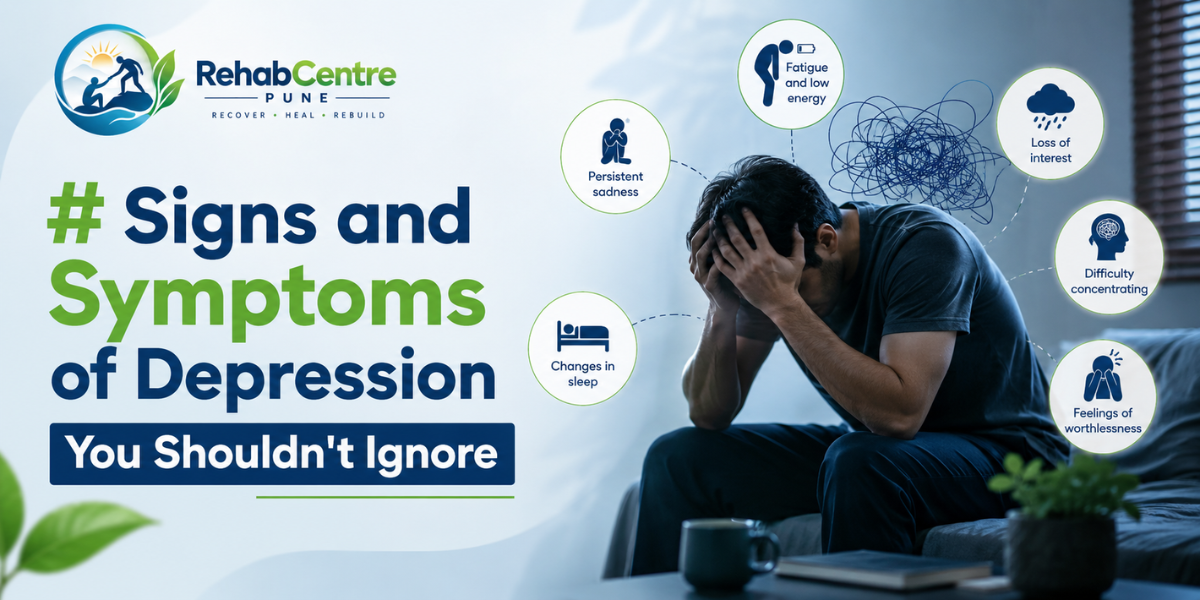
Depression doesn’t always look like sadness — sometimes it shows up as exhaustion, irritability, or simply losing interest in things that once mattered. Nasha mukti kendra searches often lead people to addiction care alone, but depression is just as important to recognize, since the two frequently occur together. Because the signs and symptoms of depression can be subtle, they’re often mistaken for stress, a “phase,” or just having a bad week — until they start affecting daily life.
Recognizing these depression symptoms early can make a real difference in recovery. Below are the main symptoms of depression that are commonly overlooked, but shouldn’t be — along with the different types of depression and when to consider professional Depression Treatment.
Main Symptoms of Depression
1. Persistent Low Mood That Doesn’t Lift
Feeling sad occasionally is normal. But when a low, empty, or hopeless mood lasts for most of the day, nearly every day, for two weeks or more, it may be a sign of clinical depression rather than a passing phase.
2. Loss of Interest in Things Once Enjoyed
One of the clearest signs and symptoms of depression is losing interest or pleasure in hobbies, work, or relationships that used to feel meaningful. This is known as anhedonia, and it’s often one of the earliest signs — even before mood changes are obvious.
3. Constant Fatigue, Even After Rest
Depression can drain energy at a physical level. Someone may sleep a full night and still wake up feeling exhausted, or find even small tasks — like getting dressed or replying to messages — feel overwhelming.
4. Changes in Sleep Patterns
Both insomnia and oversleeping can signal depression. Some people struggle to fall or stay asleep, while others sleep far more than usual and still don’t feel rested.
5. Appetite or Weight Changes
Depression can affect appetite in either direction — noticeable weight loss from eating less, or weight gain from eating more, especially as a coping mechanism.
6. Difficulty Concentrating or Making Decisions
People with depression often describe a mental “fog” — trouble focusing at work or school, forgetting things easily, or feeling paralyzed when faced with simple decisions.
7. Irritability or Restlessness
Depression doesn’t always look like sadness — in some people, especially men and teenagers, it shows up as irritability, frustration, or a short temper over small things. This overlaps closely with symptoms seen in anxiety, which is why Anxiety Disorder Treatments and depression care often go hand in hand.
8. Withdrawing from Family and Friends
Pulling away from social plans, avoiding calls, or preferring isolation over company is a common but often-missed sign. It’s frequently mistaken for someone being “busy” or “introverted.”
9. Physical Aches Without a Clear Cause
Unexplained headaches, back pain, or digestive issues that don’t improve with treatment can sometimes be linked to depression. The mind and body are closely connected, and emotional distress often shows up physically.
10. Feelings of Worthlessness or Excessive Guilt
Persistent self-criticism, feeling like a burden, or dwelling on past mistakes far beyond what the situation calls for can be a sign of depression rather than a personality trait.
Types of Depression
Depression isn’t a single, one-size-fits-all condition. Recognizing which type may be present can help guide the right Depression Treatment approach.
- Major Depressive Disorder (MDD): Intense symptoms that interfere with daily life, lasting two weeks or more.
- Persistent Depressive Disorder (Dysthymia): Milder but longer-lasting symptoms, often persisting for two years or more.
- Postpartum Depression: Occurs after childbirth, involving deep sadness, exhaustion, and anxiety beyond typical “baby blues.”
- Seasonal Affective Disorder (SAD): Depression tied to seasonal changes, usually worsening in low-sunlight months.
- Situational Depression: Triggered by a specific life event or stressor, such as loss, job change, or trauma.
- Bipolar Depression: The depressive phase of bipolar disorder, alternating with periods of mania or hypomania.
If any of the symptoms above sound familiar, understanding the type of depression involved is a helpful next step — and something a mental health professional can assess accurately.
Depression and Substance Use: Why It Often Co-Occurs
Depression and addiction frequently occur together. Some people turn to alcohol or drugs to cope with low mood, while substance use itself can worsen or trigger depression over time.
Rehab centres Pune that only focus on de-addiction, without screening for underlying mental health conditions like depression and anxiety, often see relapse rates rise — because the root emotional cause is left untreated.
At Rehab Centre Pune, our approach treats both conditions together, rather than in isolation.
When to Seek Help
If several of these signs have lasted more than two weeks and are affecting work, relationships, or daily functioning, it’s worth speaking to a mental health professional. Depression is treatable, and reaching out early often leads to a smoother, faster recovery.
If you or someone you know is having thoughts of self-harm or suicide, please reach out to a crisis helpline or mental health professional immediately — you don’t have to face this alone.
Depression Treatment at Rehab Centre Pune
At Rehab Centre Pune, our clinical team offers confidential assessment and personalized Depression Treatment, combining therapy, medical support, and structured recovery programs. We also offer Anxiety Disorder Treatments for those experiencing overlapping symptoms.
Vyasan Mukti Kendra support is also available for anyone facing both depression and substance use challenges, with both conditions treated under one integrated care plan.
FAQ
Q: What are the main symptoms of depression?
The main symptoms of depression include persistent low mood, loss of interest in activities, fatigue, sleep and appetite changes, difficulty concentrating, and feelings of worthlessness.
Q: What is the first sign of depression?
Loss of interest in things you once enjoyed is often the earliest and most reliable sign, even before mood changes are noticeable.
Q: Can depression cause physical symptoms?
Yes. Fatigue, appetite changes, and unexplained body aches are common physical symptoms of depression.
Q: How long do depression symptoms need to last for it to be clinical?
Generally, symptoms lasting two weeks or more, most of the day, nearly every day, may indicate clinical depression and warrant a professional evaluation.
Q: Is depression connected to addiction?
Yes. Depression and substance use often occur together, which is why treatment centres offering both mental health care and de-addiction (nasha mukti kendra) support tend to see better recovery outcomes.
Q: What Depression Treatment options are available?
Common options include talk therapy, medication, lifestyle-based interventions, and structured programs like those offered at Rehab Centre Pune, which combine clinical and emotional support.