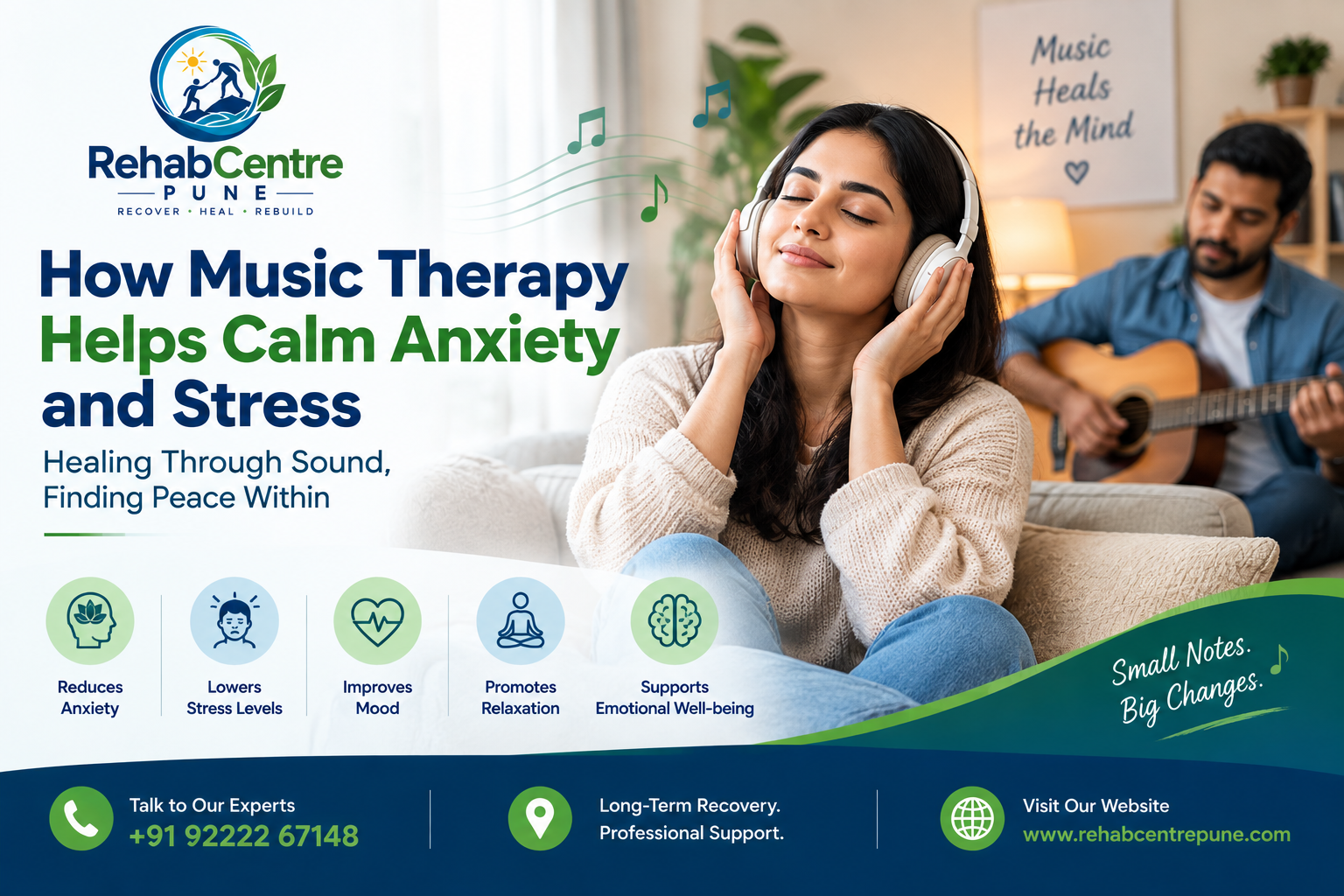
Anxiety affects many people, and a lot of them look for something gentle and practical to use alongside professional care. Music is one of the simplest options. It is familiar, easy to access and works on the body as well as the mind.
If you have noticed that certain music settles you when worry builds, music therapy builds on that experience in a structured way. This guide explains what music therapy is, how it helps anxiety, which music suits which problem, what you can try at home, and when it is time to seek professional help.
Struggling With Anxiety or Stress? Talk to a Professional
If constant worry, panic or stress is affecting your sleep, work or daily life, professional guidance can help you understand what is happening and explore the right treatment and support alongside approaches like music therapy.
CALL NOW – 8506085075What Is Music Therapy?
Music therapy is a guided practice that uses music to support emotional and physical wellbeing. Unlike casual listening, it is built around goals such as slowing a racing heart, settling anxious thoughts or processing emotions that are hard to put into words.
In a clinical or wellness setting, sessions usually take one of three forms:
- Receptive listening: listening to selected music while a therapist observes your physical and emotional response
- Active participation: playing a simple instrument or doing rhythm exercises
- Guided imagery with music: pairing visualization with calming sound
Music therapy has been used in hospitals and rehabilitation settings for decades and is now a recognised complementary approach in mental health and addiction care.
How Does Music Therapy Help Anxiety?
Music therapy helps anxiety by shifting the body out of “fight or flight” and toward a calmer, more regulated state. Slow tempo, predictable rhythm and low-pitched tones signal safety to the brain, which is why calming playlists favour slow instrumental pieces, ambient sound or nature audio over fast or unpredictable music.
A few mechanisms are thought to be involved:
- Heart rate entrainment: heart rate tends to drift toward the tempo of the music, so slower music can help slow a racing heartbeat.
- Lower stress hormones: calming music has been linked to reductions in cortisol, the body’s main stress hormone.
- Mood support: music a person finds meaningful can trigger dopamine release, which supports mood alongside relaxation.
Because these effects are physical, music can help even when you do not feel “in the mood” for it.
Benefits of Music Therapy for Anxiety
The main benefits of music therapy for anxiety are a calmer body, steadier mood and a safe way to express emotion. Commonly reported benefits include:
- Lower heart rate and less muscle tension
- Reduced cortisol (stress hormone) levels
- Better mood and emotional regulation
- Improved sleep quality
- A non-verbal outlet for feelings that are hard to say out loud
Research on music interventions for stress and anxiety is encouraging, but results vary between people and studies, which is why it is best used as a complement to treatment.
Music Therapy for Anxiety Disorders
Music therapy can support people with anxiety disorders, but it works best alongside therapy and, where needed, medical treatment. For generalised anxiety, panic attacks or social anxiety, it gives practical tools to calm the body in the moment and builds a daily routine of regulation.
It does not replace clinical care for moderate to severe anxiety. If worry is persistent, disrupts work, sleep or relationships, or comes with panic attacks, a clinical assessment is the right first step. Our anxiety disorder treatments combine medical and psychological care, with wellness practices such as music therapy as support. For a wider look at care options, see our guide to anxiety disorder treatment options in Pune and how anxiety counselling works.
Which Music to Listen To for Different Problems
The best music depends on what you are trying to calm. A trained music therapist can personalise this, since people respond differently.
- General anxiety: slow instrumental music (60 to 80 BPM), such as classical, ambient or acoustic tracks.
- Panic attacks or acute stress: very slow, low-pitched, minimal sound, such as a single instrument, rain or ocean waves. Simple sound is easier for an overstimulated mind to follow.
- Social anxiety or racing thoughts: instrumental music without lyrics, since words can compete with a busy mind.
- Sleep-related anxiety: slow ambient tracks without sudden changes in tempo or volume.
- Low mood alongside anxiety: gently uplifting acoustic or instrumental music, not overly energetic. If low mood persists, learn the signs and symptoms of depression.
- Daily or workplace stress: steady, mid-tempo instrumental music while working or commuting.
How to Try Music Therapy Techniques at Home
Simple techniques can support day-to-day stress, though structured music therapy is best guided by a professional, especially for moderate to severe anxiety.
- Build a calm playlist of slow, low-pitched instrumental tracks. Around 60 to 80 BPM tends to sit close to a resting heart rate.
- Listen with focus for 10 to 15 minutes. Follow one instrument at a time instead of letting music play in the background.
- Pair music with slow breathing, matching your inhale and exhale to the rhythm.
- Try gentle humming, which some people find relaxing.
- Use music as a wind-down cue before sleep. A consistent routine helps signal that it is time to rest.
These are a good starting point, but they are not a substitute for professional support when anxiety is persistent or affecting daily life.
Sound Therapy for Anxiety: How It Differs from Music Therapy
Sound therapy focuses on tones, frequencies and ambient sound, such as singing bowls or nature sounds, rather than structured musical pieces. Both aim to calm the nervous system, and many wellness programmes use elements of each.
How Music Therapy Fits Into a Complete Treatment Plan
Music therapy works best as one part of a broader plan. For clinical-level anxiety it is most useful alongside therapy and medically guided care.
It is also used in addiction recovery to help people manage stress and emotional triggers that can contribute to relapse. Programs such as alcohol addiction treatment and drug and substance de-addiction can include creative and emotional therapies in daily routines, because they give people a non-verbal way to process stress in early recovery. [VERIFY: confirm how music therapy is delivered at Rehab Centre Pune before stating specifics]
If you are comparing options, a good Nasha Mukti Kendra in Pune will pair medical care with emotional and creative therapies.
At Rehab Centre Pune, music therapy is one of several practices in our wellness programs, alongside yoga, mindfulness and expressive art therapy. They are designed to work with clinical treatment, not replace it.
When to Seek Professional Help
See a doctor or mental health professional if anxiety lasts for weeks, interferes with sleep, work or relationships, or comes with panic attacks, or if you are using alcohol or other substances to cope. If you ever feel unsafe or at risk of harming yourself, contact a local emergency service or a crisis helpline right away.
Looking for Care Near You in Pune?
Explore our rehab centre locations across Pune and find the one closest to you.
FAQs
Does music therapy help with anxiety?
Yes, it is a supported complementary tool for easing anxiety symptoms, especially alongside therapy or medical treatment.
How does music therapy help anxiety?
Slow, predictable music helps lower heart rate and muscle tension and shifts the body toward a calmer state.
What are the benefits of music therapy for anxiety?
Calmer body, better mood, better sleep and a way to express feelings without words.
Can music therapy treat anxiety disorders?
It can support treatment, but it should not replace therapy or medication for moderate to severe anxiety.
What kind of music is best for stress relief?
Slow, low-pitched, predictable music, such as instrumental, ambient or nature sounds.
Is sound therapy the same as music therapy?
Not exactly. Sound therapy focuses on tones and frequencies. Music therapy uses structured music with therapeutic goals.
How often should I practise?
Short daily sessions of 10 to 15 minutes of focused listening are a good start. A therapist can tailor frequency to your needs.
Is music therapy suitable during addiction recovery?
Yes. It is commonly used to help manage stress and emotional triggers, alongside clinical treatment.
What happens in a music therapy session?
You may listen to selected music, play simple instruments or do guided relaxation with sound while a therapist observes and adjusts the approach.