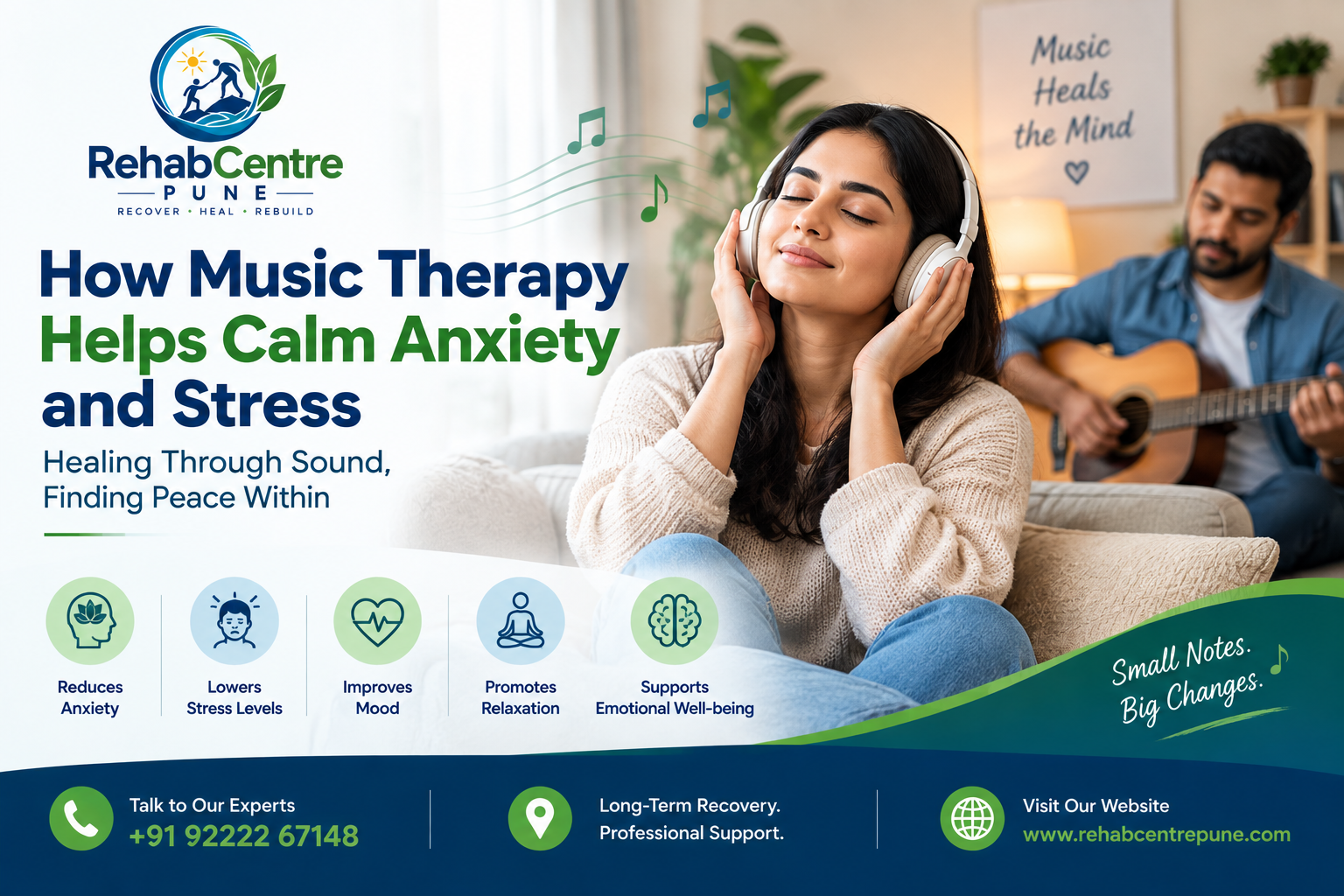
Music therapy for anxiety and stress uses structured listening, playing, or creating music to help regulate emotions, calm the nervous system, and ease physical tension. It’s increasingly used alongside clinical treatment as a supportive tool for people managing anxiety, stress, and related conditions. This guide covers how it works, its benefits, and how it fits into a complete recovery or wellness plan.
What Is Music Therapy?
Music therapy is a guided practice that uses music — through listening, rhythm, or active participation — to support emotional and physical wellbeing. Unlike casually listening to music at home, music therapy for stress is typically structured around specific goals, such as lowering heart rate, easing racing thoughts, or processing difficult emotions in a safe setting.
In a clinical or wellness setting, a trained therapist may guide sessions through a few formats:
- Receptive listening — listening to carefully selected music while a therapist observes physical and emotional responses
- Active participation — playing an instrument or using rhythm exercises
- Guided imagery paired with music — combining visualization techniques with sound
Music therapy has been used in clinical settings for decades, originally gaining traction in hospital and rehabilitation environments before becoming a recognized complementary approach in mental health and addiction treatment programs.
Benefits of Music Therapy
The benefits of music therapy extend across both emotional and physical wellbeing, making it a useful complement to clinical anxiety and stress treatment. Commonly reported benefits include:
- Lower heart rate and reduced muscle tension
- Reduced cortisol (stress hormone) levels
- Improved mood and emotional regulation
- Better sleep quality
- A non-verbal outlet for emotions that are difficult to express in words
The Science Behind Music and the Nervous System
Music affects the body on a physiological level, not just an emotional one, which is part of why music therapy for anxiety works even when someone doesn’t consciously feel “in the mood” for it. Slow, rhythmic music influences the autonomic nervous system, gradually shifting it from a heightened stress response toward a calmer, more regulated state, through a few key mechanisms:
- Heart rate entrainment: heart rate naturally tends to sync with the tempo of music being played, so slower music can gradually slow a racing heartbeat.
- Cortisol reduction: calming music has been associated with measurable reductions in cortisol, the body’s primary stress hormone.
- Dopamine and mood regulation: music, particularly music a person finds personally meaningful, can trigger dopamine release, supporting mood improvement alongside stress reduction.
This is why music therapy for stress isn’t just a relaxation technique in the casual sense — it has a measurable physiological basis, which is part of why it’s increasingly incorporated into structured treatment settings.
Music Therapy for Anxiety: How It Works
Music therapy for anxiety works by shifting the nervous system out of a heightened “fight or flight” state and into a calmer, more regulated one. Slow tempo, predictable rhythm, and low-pitched tones are especially effective at signaling safety to the brain, which is why relaxing music for stress relief often features these qualities — slow instrumental pieces, ambient sounds, or nature-based audio rather than fast or unpredictable music.
Sound Therapy for Anxiety vs. Music Therapy
Sound therapy for anxiety is closely related to music therapy but focuses more specifically on tones, frequencies, and ambient sound — such as singing bowls or nature sounds — rather than structured musical compositions. Both approaches aim to calm the nervous system, and many wellness programs, including ours, incorporate elements of each.
How to Try Music Therapy Techniques at Home
While structured music therapy is best guided by a trained therapist, especially for moderate to severe anxiety, there are simple techniques anyone can try to support day-to-day stress management:
- Create a “calm playlist” of slow-tempo, low-pitched, instrumental tracks (around 60–80 beats per minute tends to align well with a resting heart rate).
- Practice focused listening for 10–15 minutes, paying attention to individual instruments or sounds rather than letting music play in the background.
- Pair music with breathing exercises, syncing slow inhales and exhales with the rhythm of the music.
- Try humming or gentle vocalization, which can activate the vagus nerve and support relaxation.
- Use music as a wind-down cue before sleep, since consistent audio cues can help signal to the body that it’s time to relax.
These techniques can be a helpful starting point, but they work best as a complement to — not a replacement for — professional support when anxiety is persistent or significantly affecting daily life.
Which Type of Music to Listen to, Based on Your Problem
Different anxiety and stress-related concerns respond better to different types of music, since the goal — calming a racing mind, easing physical tension, or improving sleep — isn’t always the same.
- For general anxiety: Slow instrumental music (60–80 BPM), such as classical, ambient, or acoustic tracks, helps ease persistent worry and calm the nervous system over time.
- For panic attacks or acute stress: Very slow, low-pitched, minimal music — think single-instrument pieces or nature sounds like rain or ocean waves — works best in the moment, since simpler sound is easier for an overstimulated mind to follow.
- For social anxiety or racing thoughts: Instrumental music without lyrics is generally more effective, since lyrics and vocals can compete with a busy mind rather than helping it settle.
- For sleep-related anxiety or insomnia: Very slow ambient or binaural-style tracks, ideally without sudden shifts in tempo or volume, support the wind-down process before bed.
- For low mood or depressive symptoms alongside anxiety: Gently uplifting instrumental or acoustic music — not overly energetic — can support mood without overstimulating an already anxious nervous system.
- For workplace or daily stress: Steady, mid-tempo instrumental music in the background during work or commuting can help maintain a calmer baseline throughout the day, rather than only during dedicated listening sessions.
A trained music therapist can personalize this further based on individual response, since not everyone reacts to the same music in the same way — this is one of the reasons structured music therapy tends to be more effective than generic playlists alone.
How Music Therapy Fits Into a Complete Treatment Plan
Music therapy works best as part of a broader approach rather than a standalone solution, especially for clinical-level anxiety. It’s typically most effective when paired with therapy, and where needed, medically guided anxiety disorder treatments — supporting emotional regulation without replacing clinical care for moderate to severe anxiety.
Music therapy is also used within addiction recovery settings to help manage stress and emotional triggers that can contribute to relapse, often built into daily programming alongside clinical treatment.
Vyasan Mukti Kendra programs that include emotional and creative therapies alongside de-addiction support often see better engagement from patients, since music and creative outlets give people a non-verbal way to process stress and emotional triggers during early recovery.
A well-rounded Nasha Mukti Kendra typically integrates practices like music therapy into daily programming, recognizing that emotional regulation tools play a meaningful role in sustained recovery, not just symptom management during treatment.
Music Therapy as Part of Our Wellness Programs
At Rehab Centre Pune, music therapy is one of several practices offered under our wellness programs, alongside yoga, mindfulness, and expressive art therapy. These are designed to work alongside clinical anxiety disorder treatments, not replace them — giving patients both medical support and practical, day-to-day tools for managing stress.
FAQs
Does music therapy actually help with anxiety?
Yes, research and clinical use both support music therapy as an effective complementary tool for reducing anxiety symptoms, particularly when paired with therapy or medical treatment for more significant anxiety.
What kind of music is best for stress relief?
Slow-tempo, low-pitched, and predictable music — such as instrumental, ambient, or nature-based sounds — tends to be most effective as relaxing music for stress relief.
Is sound therapy the same as music therapy?
They’re related but not identical. Sound therapy focuses on tones and frequencies, such as singing bowls, while music therapy typically involves structured musical activities or listening with specific therapeutic goals.
Can music therapy replace medication or therapy for anxiety?
No. Music therapy works best as a complementary tool alongside clinical anxiety disorder treatments, especially for moderate to severe anxiety.
How often should I practice music therapy techniques for stress relief?
Even short daily sessions of 10–15 minutes of focused listening can be beneficial, though frequency and format are often best guided by a therapist based on individual needs.
Is music therapy suitable for someone in addiction recovery?
Yes, music therapy is commonly used within addiction recovery programs to help manage emotional triggers and stress, and is often incorporated into daily wellness routines alongside clinical treatment.
Can music therapy help with anxiety?
Yes, music therapy is widely used as a complementary approach for anxiety, helping calm the nervous system and ease racing thoughts, particularly when combined with therapy or medical treatment for more persistent symptoms.
How much does music therapy cost?
Costs vary depending on whether it’s offered as part of a broader treatment program or as a standalone service, and on session length and frequency. — please confirm current pricing for individual and program-inclusive sessions before publishing.
What happens during a music therapy session?
A typical session may involve listening to selected music, playing simple instruments, or guided relaxation paired with sound, depending on individual goals. A therapist observes physical and emotional responses throughout and adjusts the approach accordingly.